The Barn Workshop Genius Who Gave Hearts a Second Chance
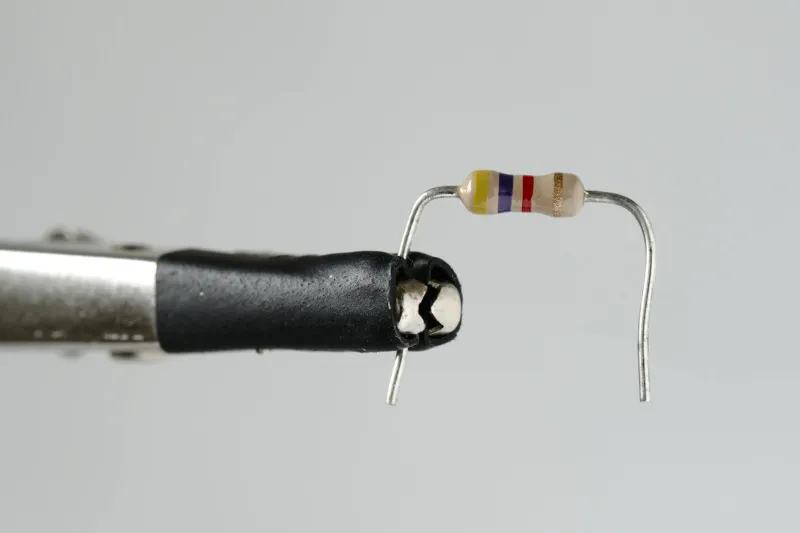
The Wrong Resistor That Changed Everything
In 1958, Wilson Greatbatch reached into his parts box and grabbed what he thought was a 10,000-ohm resistor. Instead, he picked up a 1-megohm resistor—a mistake that would accidentally create one of the most important medical devices in human history.
Working alone in his converted barn workshop in rural Clarence, New York, Greatbatch was actually trying to build a heart rhythm recorder when the wrong component made his circuit produce rhythmic electrical pulses. As he listened to the steady beat—pulse, pause, pulse, pause—a wild thought struck him: "This sounds like a heartbeat."
Most people would have corrected the error and moved on. Greatbatch, a high school dropout with no formal medical training, saw something else entirely.
The Outsider's Advantage
Greatbatch's unconventional background might have seemed like a liability, but it turned out to be his greatest asset. While medical professionals were constrained by decades of assumptions about what was possible, he approached the problem with fresh eyes and a mechanic's practical mindset.
The son of a construction contractor, Greatbatch had left school at 16 to work in shipyards during World War II. Later, he earned an electrical engineering degree on the GI Bill, but his real education came from years of hands-on tinkering. He understood circuits the way a musician understands melody—intuitively, deeply, completely.
When he started researching heart conditions, Greatbatch discovered that thousands of Americans were dying from heart block, a condition where the heart's natural pacemaker fails to send proper electrical signals. The only existing solution was an external pacemaker the size of a television set that patients had to wheel around on carts.
"I knew immediately that if I could make this thing small enough to implant, it would save lives," Greatbatch later recalled.
Building Dreams on a Shoestring
With just $2,000 in savings, Greatbatch began one of the most important experiments in medical history. His laboratory was a converted barn behind his house, his equipment a collection of surplus electronics and improvised tools. While major medical device companies had million-dollar research budgets, he had determination and an intimate understanding of how electrons behave.
The technical challenges were staggering. The device had to be small enough to implant in a human chest, powerful enough to regulate a heart, and reliable enough to work for years without maintenance. It also had to be completely sealed against body fluids and immune to electromagnetic interference.
Working nights and weekends, Greatbatch experimented with different battery chemistries, circuit designs, and encapsulation methods. He tested prototypes on dogs, carefully monitoring their hearts for any signs of irregularity or rejection. Each failure taught him something new about the delicate balance between electronic engineering and human biology.
The Medical Establishment Pushes Back
When Greatbatch finally had a working prototype, he faced his biggest challenge yet: convincing the medical establishment to take him seriously. Doctors dismissed him as a tinkerer playing with forces beyond his understanding. Engineers called his design impractical and overly simplistic.
"They told me a layman had no business trying to redesign the human body," Greatbatch remembered. "But that's exactly what gave me the freedom to think differently."
The breakthrough came when Dr. William Chardack, a cardiac surgeon in Buffalo, agreed to examine Greatbatch's device. Unlike his colleagues, Chardack recognized the elegant simplicity of the design. On April 15, 1960, they successfully implanted the first pacemaker in a human patient.
The patient, a 77-year-old man whose heart was failing, lived another 18 months with dramatically improved quality of life. More importantly, the surgery proved that Greatbatch's barn workshop innovation could work in the real world.
The Ripple Effect of Rural Innovation
Greatbatch's accidental discovery launched a medical revolution. Within a decade, implantable pacemakers became standard treatment for heart rhythm disorders. By the time of his death in 2011, more than 8 million people worldwide were living with devices based on his original design.
But the impact went beyond just saving lives. Greatbatch's success challenged fundamental assumptions about who could innovate in medicine. His story proved that breakthrough discoveries don't always come from prestigious research institutions or well-funded laboratories.
The Lesson in the Barn
Today, as medical research becomes increasingly specialized and expensive, Greatbatch's story offers a powerful reminder about the value of outsider thinking. His lack of formal medical training wasn't a weakness—it was the very thing that allowed him to see solutions that experts missed.
The man who started with a $2,000 budget and a converted barn ultimately held more than 325 patents and founded multiple companies. But his greatest achievement remains that first accidental circuit, the wrong resistor that gave millions of people a second chance at life.
In a world where innovation often seems to require teams of PhDs and millions in funding, Wilson Greatbatch proved that sometimes all you need is curiosity, persistence, and the willingness to see opportunity in a mistake. The heart, after all, doesn't care about your credentials—it just needs to keep beating.