The Five-Time Dropout Who Became the Architect Behind America's Most Beloved National Parks
The Failure Who Couldn't Stick to Anything
By age 25, Frederick Law Olmsted Jr. had been expelled from Harvard twice, dismissed from apprenticeships in engineering, journalism, and farming, and was living in his parents' basement in Hartford, Connecticut. His father — the famous landscape architect Frederick Law Olmsted Sr. — had stopped introducing him at social gatherings. "Too embarrassing," he confided to friends.
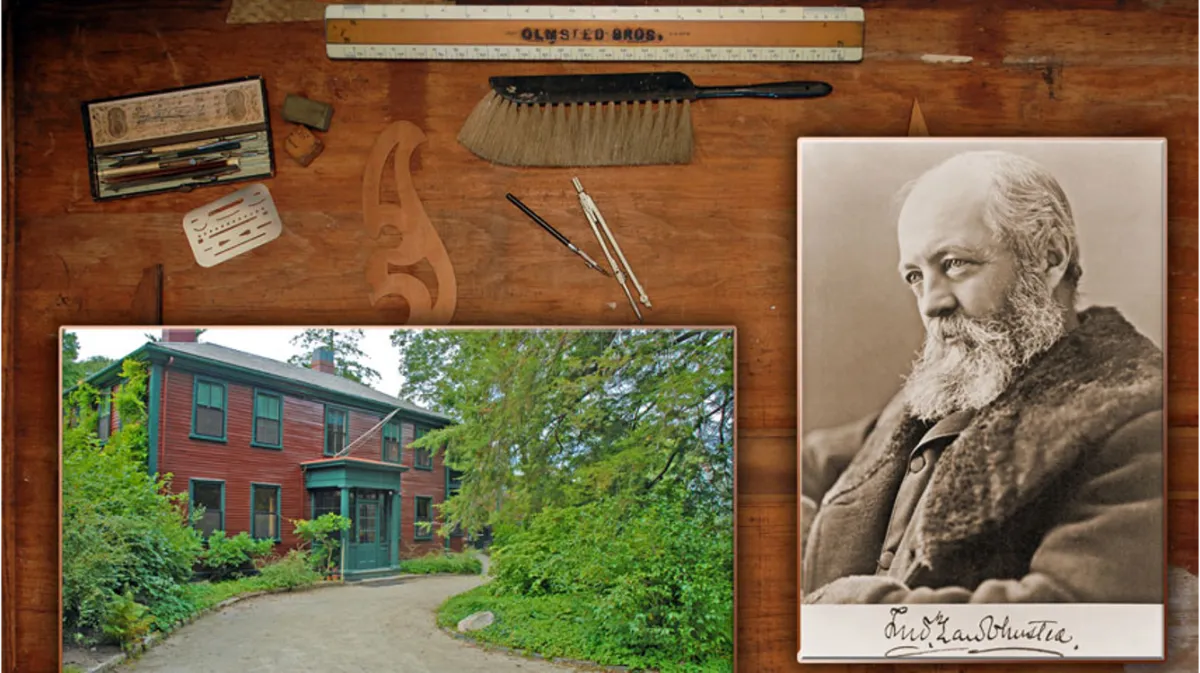 Photo: Frederick Law Olmsted Jr., via rygancorp.com
Frederick Jr. had what we might now call ADHD, though in 1895 it was simply called "inability to focus." He'd start projects with manic enthusiasm, then abandon them when something else caught his attention. His longest job had lasted four months.
What no one realized was that all that wandering was building exactly the kind of mind America would need to design its greatest landscapes.
The Accidental Education of a Wanderer
While his Harvard classmates were studying theory, Frederick Jr. was learning the land by walking it. His failed farming apprenticeship in Vermont taught him how water moved through different soils. His brief stint as a railroad surveyor in Colorado showed him how mountains created weather patterns. His disastrous attempt at journalism in California gave him an eye for what made landscapes worth writing about.
Each failure added another layer to an unconventional education. By 1898, when his father reluctantly hired him as an assistant, Frederick Jr. had walked more of America than most geologists and understood natural systems in ways that traditional landscape architects never would.
The Project That Changed Everything
The call came in 1903: the newly created National Park Service needed someone to design visitor infrastructure for Yellowstone that wouldn't destroy what made it special. Traditional architects had submitted plans that looked like European gardens dropped into wilderness. The Park Service was desperate.
Frederick Sr. was too old for the assignment, so he sent his wayward son — partly to get him out of the house, partly because no one else would take a job that seemed impossible.
Frederick Jr. spent six months in Yellowstone, much of it alone with a notebook and camping gear. While other designers would have started with blueprints, he started with observation. He tracked animal migration patterns. He studied how geysers affected surrounding vegetation. He learned where elk liked to graze and how that changed with seasons.
Most importantly, he learned to see the park not as empty space waiting to be filled, but as a complete system where every human addition needed to work with what was already there.
The Revolutionary Idea: Invisible Design
Frederick Jr.'s Yellowstone plan was unlike anything anyone had seen. Instead of grand lodges and formal gardens, he proposed buildings that seemed to grow from the landscape itself. Roads that followed natural contours rather than straight lines. Visitor facilities tucked into forest clearings where they couldn't be seen from scenic viewpoints.
The National Park Service board was skeptical. "Where's the architecture?" one member demanded. "Where are the monuments to human achievement?"
Frederick Jr.'s response became the philosophy that would guide American park design for the next century: "The monument is the landscape itself. Our job is to let people experience it without getting in the way."
From Yellowstone to a National Vision
The Yellowstone project's success led to commissions at Yosemite, then the Grand Canyon, then every major park in the developing system. Each design reflected Frederick Jr.'s core insight: that the best human intervention in natural spaces was often the most invisible.
At Yosemite, he designed the Ahwahnee Hotel to blend so seamlessly with its granite surroundings that visitors often couldn't spot it from the valley floor. At the Grand Canyon, he placed viewing areas to frame specific vistas while keeping crowds away from fragile rim ecosystems.
But his greatest contribution wasn't any single park — it was the systematic approach he developed for thinking about how humans could experience wilderness without destroying it.
The Dropout's Masterpiece: The National Park Service Design Manual
In 1916, when Congress established the National Park Service, Frederick Jr. was tasked with creating design standards for the entire system. The resulting manual became the bible for park development — a 400-page document that reflected everything he'd learned from years of wandering and observing.
The manual's core principles were revolutionary for their time:
- Buildings should be constructed from local materials whenever possible
- No structure should dominate its natural setting
- Roads and trails should follow natural contours, even if it made construction more difficult
- Visitor facilities should be clustered to minimize impact on surrounding ecosystems
These weren't the recommendations of traditional architecture training — they were insights that could only come from someone who'd spent years learning landscapes from the inside out.
The Irony of Success
By 1920, Frederick Law Olmsted Jr. was the most sought-after landscape architect in America. Harvard offered him a professorship (which he declined). The American Institute of Architects gave him their gold medal. Presidents sought his advice on everything from White House gardens to urban planning.
The man who couldn't finish anything had created a design philosophy that would shape American landscapes for generations. The dropout who'd embarrassed his family had become more influential than his famous father.
But perhaps the greatest irony was that Frederick Jr.'s success came precisely because he'd never learned to think like a traditional architect. His years of wandering and failing had taught him to see landscapes as living systems rather than blank canvases — exactly the perspective America needed as it tried to preserve its natural wonders.
The Legacy of Learning by Wandering
Today, more than 400 million people visit America's national parks annually. Most never think about the design principles that shape their experience — the careful placement of trails, the strategic location of facilities, the way roads curve to reveal views gradually rather than all at once.
They're experiencing the vision of a man who was considered unemployable at 25, whose unconventional education came from failure rather than success, and who understood that sometimes the best way to design something is to first spend years learning how it already works.
Frederick Law Olmsted Jr. proved that there's more than one way to prepare for greatness. Sometimes the longest path — the one that looks like wandering — turns out to be exactly the right preparation for challenges no one else saw coming.