The Dropout Who Decoded the Dead Sea Scrolls Before the Experts Could
The Night Shift Scholar
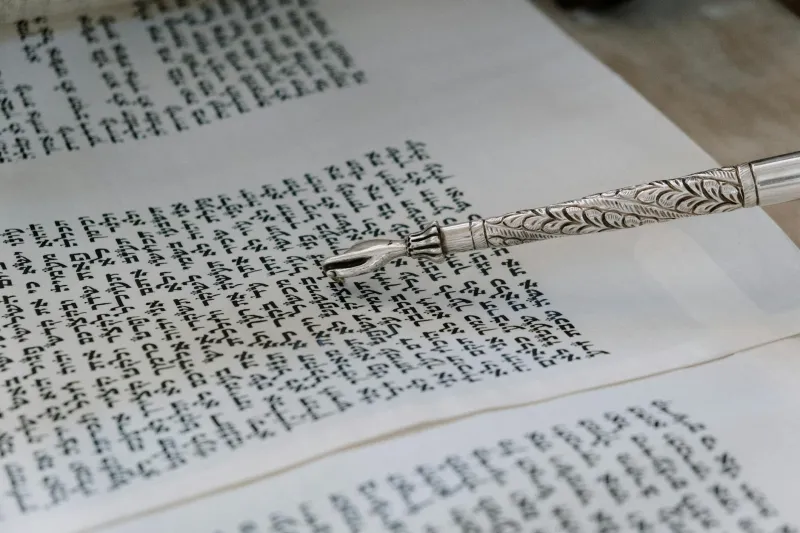
Sometime around 2 AM on a Tuesday in 1987, between filling up tanks and restocking the candy aisle, Michael Wise pulled out a worn photocopy of ancient Hebrew text. The fluorescent lights of the Texaco station in suburban Chicago cast harsh shadows across the mysterious fragments that had puzzled the world's leading biblical scholars for nearly forty years.
Wise had dropped out of the University of Chicago three years earlier. Not because he couldn't handle the work—his professors still remember his uncanny ability to read ancient languages like morning newspapers. He left because he couldn't afford tuition and his family needed him to work. But every night, between customers, he continued what had become an obsession: decoding the Dead Sea Scrolls.
When the Establishment Hit a Wall
The Dead Sea Scrolls, discovered in caves near Qumran in the 1940s, represented the archaeological find of the century. These ancient manuscripts, some dating back over 2,000 years, contained biblical texts and previously unknown religious writings that could reshape our understanding of early Christianity and Judaism.
But by the 1980s, progress had stalled. A small, exclusive team of scholars controlled access to the unpublished fragments, and many of the most challenging pieces remained untranslated. The academic establishment, with all its resources and credentials, had hit a wall.
Meanwhile, in Chicago, a gas station attendant was making breakthroughs.
The Unlikely Detective
Wise's journey began in high school, where a charismatic Hebrew teacher introduced him to ancient texts. While other students struggled with basic vocabulary, Wise absorbed the language's patterns like a sponge. He taught himself Aramaic, then ancient Greek, spending hours in the public library copying texts by hand because he couldn't afford photocopies.
When he arrived at the University of Chicago, professors were amazed by his intuitive grasp of linguistic puzzles. But when his father's construction business failed and his family faced foreclosure, academic pursuits became a luxury he couldn't afford.
"I remember thinking I was done with all that," Wise later recalled. "But you can't just turn off curiosity."
Breaking the Code
Working with bootleg photocopies and correspondence from sympathetic graduate students, Wise developed his own methodology. While established scholars approached the fragments with rigid academic frameworks, Wise treated them like detective stories. He looked for patterns others missed, connections that formal training might actually obscure.
His breakthrough came with a particularly stubborn fragment that had defeated multiple translation attempts. Where others saw disconnected words, Wise recognized a pattern from medieval Jewish mystical texts—knowledge he'd gained from wandering through used bookstores, not university libraries.
The fragment wasn't just biblical commentary. It was a previously unknown hymn, complete with musical notations, that revealed new insights into ancient Jewish worship practices.
The Establishment Takes Notice
Wise's translation, initially shared through informal academic networks, created a sensation. Here was a college dropout, working the graveyard shift at a gas station, solving puzzles that had stumped tenured professors at Harvard, Oxford, and Hebrew University.
The response was mixed. Some scholars embraced his contributions, recognizing genuine brilliance regardless of credentials. Others questioned how someone without formal training could succeed where they had failed.
Dr. Sarah Chen, then a graduate student at Yale who first brought Wise's work to wider attention, remembers the academic politics: "There was this weird cognitive dissonance. They couldn't argue with his translations—they were clearly correct—but they couldn't accept that someone working at a gas station had outsmarted them."
Beyond the Night Shift
Wise's story didn't end with vindication. His work on the Dead Sea Scrolls eventually earned him recognition, research positions, and the opportunity to complete his education on his own terms. But perhaps more importantly, it challenged how the academic world thinks about expertise and access.
Today, digital technology has democratized access to ancient texts in ways unimaginable in the 1980s. High-resolution images of manuscripts are available online, and translation software can provide initial interpretations. But Wise's story reminds us that technology is only as good as the human insight that guides it.
The Real Discovery
The Dead Sea Scrolls that Wise helped decode revealed fascinating details about ancient religious practices and beliefs. But his story reveals something equally important about human potential. Sometimes the most significant discoveries come not from those with the best credentials, but from those with the deepest curiosity.
In a world that often equates formal education with intelligence, Wise's journey from gas station to scholarly recognition proves that passion and persistence can overcome institutional barriers. His late-night translations, conducted between serving customers and cleaning restrooms, contributed to our understanding of one of history's most important archaeological discoveries.
The next time you pass a late-night gas station or convenience store, consider what mysteries the person behind the counter might be solving. Sometimes the most important work happens in the most unlikely places, by people the world never expected to change everything.