Last Picked, First Remembered: The Draft Day Disasters Who Became Sports Legends

The Art of Getting It Wrong
Every spring, professional sports teams spend millions of dollars on sophisticated scouting systems, analytics departments, and psychological evaluations—all designed to identify the next generation of superstars. And every year, they get spectacularly wrong about the most interesting people in the room.
These five stories prove that conventional talent evaluation consistently misses what matters most: the fire that burns in someone who's been told they're not good enough.
Tom Brady: The Afterthought Who Broke Football
Position 199 of the 2000 NFL Draft belonged to the New England Patriots' sixth-round selection—a skinny quarterback from Michigan who'd spent most of college sharing snaps with someone else. Tom Brady wasn't just the sixth quarterback taken that year; he was picked after a punter.
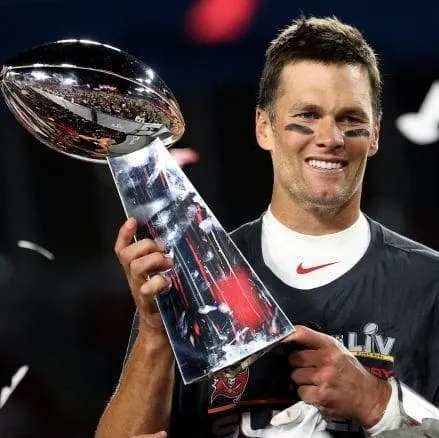 Photo: Tom Brady, via imgix.ranker.com
The scouting report was devastating: "Poor build, skinny, lacks great physical stature and strength, lacks mobility and ability to avoid the rush, lacks a really strong arm."
Six Super Bowl rings later, Brady's draft position remains the most embarrassing evaluation mistake in sports history. But the real story isn't that scouts missed his talent—it's that they completely misunderstood what talent actually looks like.
While other quarterbacks impressed with cannon arms and blazing speed, Brady possessed something unmeasurable: the ability to process information under pressure and make everyone around him better. The very qualities that made him forgettable to scouts—his methodical approach, his obsessive preparation, his refusal to rely on pure athleticism—became the foundation of the greatest career in football history.
Michael Jordan: Cut from His High School Team
Before he became the greatest basketball player who ever lived, Michael Jordan couldn't make his sophomore team at Emsley A. Laney High School in Wilmington, North Carolina.
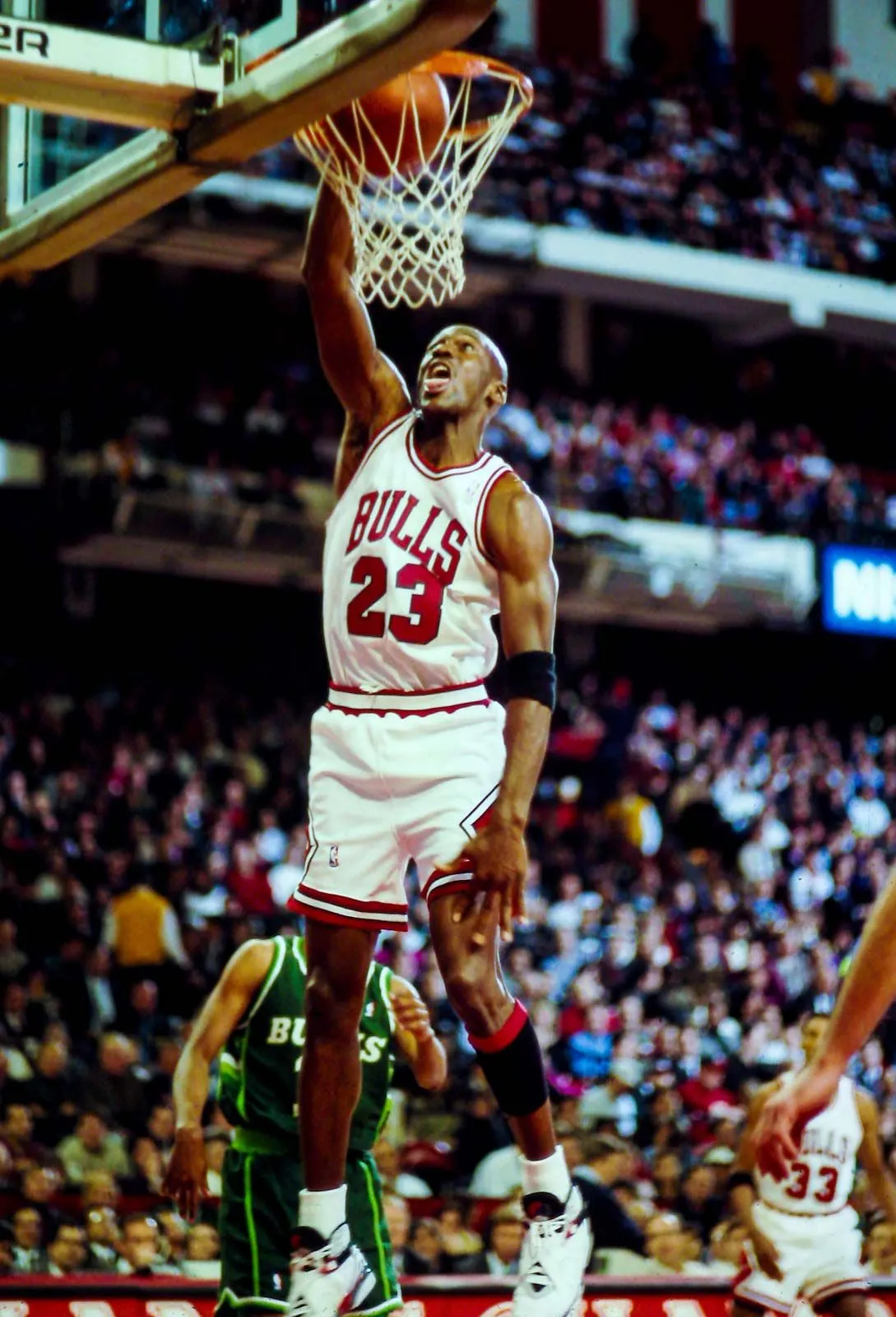 Photo: Michael Jordan, via cdn.britannica.com
Coach Clifton "Pop" Herring had fifteen spots on the varsity roster. Jordan didn't make the cut. At 5'10", he was deemed too small, too raw, too much of a project. The list of selected players was posted on the gym wall. Jordan found his name on the junior varsity roster instead.
"I went to my room and I closed the door and I cried," Jordan later recalled. "For a while, I couldn't stop. Even though there was no one else home at the time, I kept the door locked. I didn't want to take the chance of anyone seeing me or hearing me."
That humiliation became fuel. Jordan used his anger to transform his body, growing four inches and adding muscle mass through obsessive training. More importantly, he developed the psychological makeup that would define his career—the ability to turn every slight, real or imagined, into motivation.
By senior year, Jordan was unstoppable. By his professional career, he was using that same chip-on-his-shoulder mentality to dominate the NBA. The kid who wasn't good enough for his high school team became the standard by which all future greatness would be measured.
Kurt Warner: From Grocery Store to Super Bowl
In 1994, Kurt Warner was stocking shelves at a Hy-Vee supermarket in Cedar Falls, Iowa, making $5.50 an hour and wondering if his football dreams were over. No NFL team had drafted him. No NFL team had even invited him to a tryout.
Warner's path to professional football went through the Arena Football League, NFL Europe, and finally, improbably, to the St. Louis Rams as a third-string quarterback. When injuries thrust him into the starting role in 1999, nobody expected much from the former grocery clerk.
What happened next redefined what was possible for an unknown player. Warner threw for 4,353 yards and 41 touchdowns, leading the Rams to a Super Bowl victory and earning MVP honors. He did it again two years later. By the time he retired, the undrafted grocery store worker had thrown for over 32,000 yards and been inducted into the Pro Football Hall of Fame.
Warner's story isn't just about perseverance—it's about how unconventional paths can create unconventional excellence. Those years in arena football and NFL Europe, the time spent wondering if he'd ever get a real chance, had prepared him for moments other quarterbacks couldn't handle.
Roberto Clemente: The Puerto Rican Nobody Wanted
In 1954, Major League Baseball was still largely segregated, not just by race but by geography and culture. When Roberto Clemente arrived from Puerto Rico, scouts saw a talented but raw outfielder who spoke limited English and came from a place most Americans couldn't find on a map.
The Brooklyn Dodgers signed him for $10,000, then promptly tried to hide him in the minor leagues to avoid losing him in the draft. The Pittsburgh Pirates claimed him for $4,000—roughly the price of a used car.
What scouts missed was that Clemente possessed one of the greatest arms in baseball history and a hitting ability that would eventually produce 3,000 career hits. More importantly, they failed to recognize that his outsider status would fuel a determination to prove that players from Latin America belonged in the big leagues.
Clemente became the first Latino player inducted into the Baseball Hall of Fame. His 18-year career with Pittsburgh included two World Series championships, 15 All-Star selections, and a legacy that opened doors for generations of Latin American players.
The scouts who dismissed him as a project from an irrelevant island had missed one of the most complete players in baseball history.
Draymond Green: The "Undersized" Forward Who Redefined Basketball
With the 35th pick of the 2012 NBA Draft, the Golden State Warriors selected Draymond Green from Michigan State. At 6'6" and 230 pounds, Green was considered too small to play power forward and too slow to guard wings. Most draft analysts projected him as a career backup.
Green's college numbers were solid but unspectacular. He wasn't the fastest, strongest, or most skilled player available. What he possessed was basketball intelligence and an almost supernatural ability to impact winning in ways that didn't show up in box scores.
Within three years, Green was anchoring the defense for an NBA championship team. His ability to guard all five positions, facilitate offense from the power forward spot, and elevate his teammates' play became the blueprint for modern basketball.
The Warriors won four championships with Green as a cornerstone. The "undersized" forward who was supposed to be a bench player became one of the most influential players of his generation, proving that basketball IQ and competitive fire matter more than measurable physical tools.
The Pattern Behind the Misses
These five stories share a common thread: conventional evaluation systems consistently undervalue intangible qualities like work ethic, competitive drive, and the ability to perform under pressure. They overemphasize measurable physical tools while missing the psychological makeup that separates good players from legends.
More importantly, they reveal how rejection can become rocket fuel. Each of these athletes used their draft day humiliation as motivation to prove everyone wrong. The slight became their superpower.
In a world obsessed with early identification and development of talent, these stories remind us that greatness often emerges from the most unlikely places. Sometimes the best pick is the one nobody wanted to make.