Library Wi-Fi and Rocket Science: The Rural Teen Who Caught NASA's Million-Dollar Mistake
The Homework Assignment That Went to Space
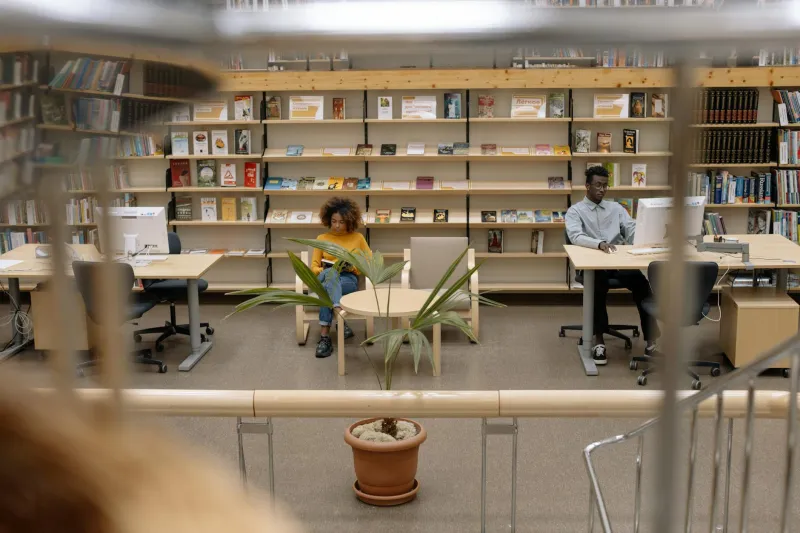
Emma Rodriguez was supposed to be writing a paper on career aspirations for her senior English class. Instead, she was hunched over a worn computer terminal in the Millfield Public Library, three hours deep into NASA's publicly available trajectory data for the Mars Sample Return mission, wondering why something seemed off about the numbers.
It was February 2019 in rural Kansas, and the closest thing to rocket science in Millfield was the crop duster that flew over Henderson's farm each spring. But Emma had always been the kind of kid who saw patterns where others saw chaos, who asked "what if" when everyone else asked "why bother."
What started as procrastination on a homework assignment would end up saving NASA millions of dollars and changing how the agency approached mission planning.
When Free Time Meets Free Data
Emma's fascination with space had started the way most teenage obsessions do—accidentally. A documentary about Mars exploration had led to a Wikipedia rabbit hole, which led to NASA's open data archives, which led to her spending every afternoon after school at the library, teaching herself orbital mechanics from YouTube videos and scientific papers.
Her physics teacher, Mr. Patterson, had noticed her interest and started printing out research papers he found online, but the school's ancient computers couldn't handle the complex modeling software Emma wanted to use. The library's newer machines, donated by a tech company in Wichita, became her mission control center.
"I wasn't trying to be a genius or anything," Emma would later tell reporters. "I just liked playing with the numbers. It was like sudoku, but with rocket ships."
The Pattern That Didn't Add Up
The Mars Sample Return mission was one of NASA's most ambitious projects: a series of spacecraft designed to collect samples from the Martian surface and bring them back to Earth. The trajectory calculations were publicly available as part of NASA's transparency initiatives, buried in technical documents that most people would never think to read.
Emma had been working through the orbital transfer calculations as a way to understand how mission planners got spacecraft from Earth to Mars efficiently. She was using free software called GMAT (General Mission Analysis Tool) that NASA had made available to students and researchers.
That's when she noticed it: a tiny discrepancy in the delta-v calculations for the return trajectory. The difference was small—just a few meters per second—but in space, small errors compound into catastrophic problems.
The Email That Almost Got Deleted
Emma spent two weeks double-checking her work. She recalculated the trajectory dozens of times, used different software packages, even borrowed her older brother's graphing calculator to verify her math by hand. Every time, she got the same result: NASA's published trajectory would leave the return spacecraft about 2,000 kilometers off course when it reached Earth orbit.
Finally, she did what any teenager would do when they think they've found something important: she sent an email. Not to some generic NASA inbox, but to Dr. Jennifer Walsh, whose name appeared on several of the trajectory papers Emma had been studying.
The subject line read: "Question about MSR trajectory calcs from high school student." It almost got deleted as spam.
From Curiosity to Crisis Prevention
Dr. Walsh, a senior mission planner at the Jet Propulsion Laboratory, later admitted she only opened Emma's email because she was procrastinating on her own work. What she found was a politely worded message from a teenager in Kansas, complete with detailed calculations and a suggestion that there might be an error in the mission planning.
"My first instinct was to send a polite 'thanks for your interest' reply," Walsh recalled. "But something about her calculations looked... right. So I forwarded it to my team."
What followed was forty-eight hours of intense verification at JPL. Emma's calculations were correct. A rounding error in the mission planning software—too small to trigger any automated alerts—had been propagating through months of trajectory calculations. If uncorrected, it would have caused the return spacecraft to miss Earth orbit entirely, sending billions of dollars worth of Martian samples into deep space.
The Call That Changed Everything
Emma was in AP Chemistry when the call came. The school secretary knocked on the classroom door and announced that someone from NASA was on the phone for her. Her classmates thought it was a joke.
Dr. Walsh was calling to thank her personally and to invite her to JPL for the mission launch. But more importantly, she wanted to understand how a high school student with no formal training had spotted something that a team of professional engineers had missed.
The answer, it turned out, was precisely because Emma had no formal training. She approached the problem without assumptions about what was supposed to work. She checked everything because she assumed she might be wrong. She used multiple verification methods because she didn't trust her own expertise.
"The professionals were looking for big errors," Emma explained. "I was looking for any errors, because I figured if I was going to be wrong, I wanted to know why."
The Ripple Effect of Fresh Eyes
NASA's response to Emma's discovery went beyond simply fixing the trajectory error. The agency launched a comprehensive review of its mission planning processes, looking for other places where small errors might be hiding in plain sight.
They also expanded their citizen science programs, recognizing that fresh perspectives—unburdened by professional assumptions—could provide valuable quality control for complex projects. Emma's story became a case study in the importance of making scientific data accessible to the public.
From Library Computers to Launch Pads
Emma graduated as valedictorian of Millfield High School and received a full scholarship to MIT, where she's now studying aerospace engineering. But she still spends time in libraries, still approaches problems with the same curiosity that led her to question NASA's math.
The Mars Sample Return mission launched successfully in 2021, following the corrected trajectory that Emma had helped identify. When the samples return to Earth in 2031, part of their safe arrival will be due to a teenager who had nothing but time, curiosity, and access to a public library computer.
"People always ask me how I knew to check NASA's calculations," Emma says now. "The truth is, I didn't know not to. Sometimes the best discoveries come from not knowing what's impossible."
Her story reminds us that in an age of open data and free software, the next breakthrough might come from anywhere—even from a small town library where a curious teenager decides to see what happens when you take rocket science seriously, even if rocket science doesn't take you seriously yet.