The Night Shift Genius: How a Maintenance Worker Spotted What MIT's Finest Missed
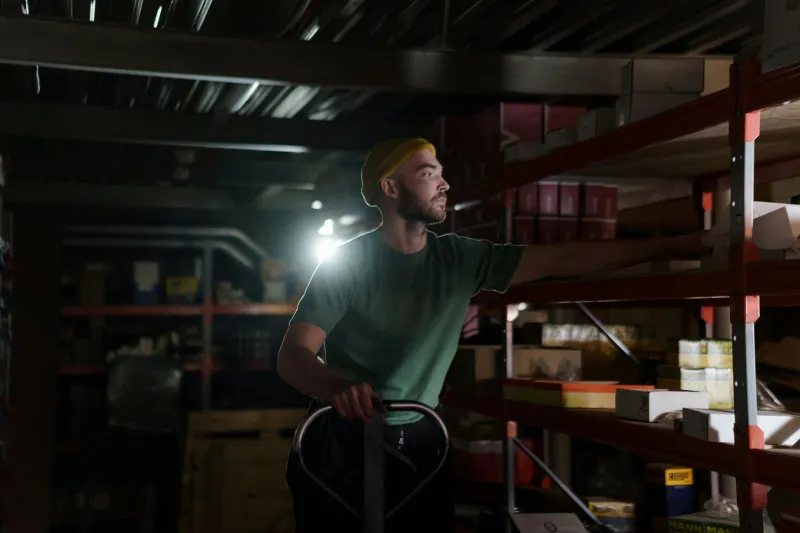
The Night Shift Genius: How a Maintenance Worker Spotted What MIT's Finest Missed
In the early 1970s, a recurring problem plagued NASA's Skylab program. A critical valve system was malfunctioning in ways that baffled the agency's best engineers. Teams of PhDs had spent weeks analyzing schematics, running simulations, and debating theories in sterile conference rooms. Nothing worked. The malfunction persisted, and the mission timeline was slipping.
Then a night-shift custodian named George Mueller—working alone in the Skylab assembly facility after hours—noticed something odd. While emptying trash near the valve assembly station, he observed that the valve was positioned in a way that made sense on paper but created an awkward angle in actual three-dimensional space. Every time technicians accessed the adjacent component during maintenance, they were slightly jostling the valve mechanism. It was subtle. Invisible in diagrams. But in the real world, with real hands doing real work, it was enough to cause the recurring failure.
George mentioned it to a supervisor. The valve was repositioned. The problem vanished.
No one wrote a paper about it. Mueller didn't get a promotion. There's no official record of his name attached to the fix. But Skylab's mission succeeded, and the cascade of discoveries that followed—about how humans adapt to microgravity, about long-duration spaceflight, about the future of orbital research—might never have happened without a man with a mop bucket and the perspective that comes from being the only person in the room who wasn't thinking about what should work, but rather what actually worked.
When the Org Chart Gets in the Way
This isn't an isolated incident. Throughout the history of engineering, manufacturing, and scientific research, some of the most elegant solutions have come from people whose official job description didn't include problem-solving.
At a pharmaceutical manufacturing facility in New Jersey during the 1980s, a quality control inspector named Patricia Dominguez noticed that a particular batch of pills consistently came out with microscopic surface irregularities—nothing that violated specifications, but enough to concern her. The problem had stumped the production team for months. They'd adjusted temperatures, changed machinery settings, and consulted with the equipment manufacturer.
Dominguez, who had worked on the production floor for fifteen years, recognized the pattern. It wasn't a machinery problem. It was a timing issue. The compressed tablets were being moved to the cooling stage too quickly. The interior was still slightly warm and contracting at a different rate than the exterior. She suggested a thirty-second delay in the conveyor sequence.
The fix cost nothing. It eliminated the defect entirely.
Why did Dominguez see it when engineers with advanced degrees didn't? Because she watched the process happen thousands of times. She wasn't consulting a theoretical model; she was observing reality in real time, in all its messy, non-linear detail.
The Tyranny of the Blueprint
There's something about formal credentials that can paradoxically make you less likely to solve certain problems. When you've spent years learning the accepted way to approach a challenge, you develop neural pathways that are optimized for conventional thinking. You see the world through the lens of your training.
Maintenance workers, custodians, and production-floor staff live in the world as it actually exists, not as it appears in documentation. They see how machines behave when they're tired. They notice which components wear faster when the ambient temperature shifts by five degrees. They know which access points are genuinely user-friendly and which ones only work in theory.
At the Caltech Jet Propulsion Laboratory in the 1990s, a mechanical technician named Robert Soto was cleaning around a sensor assembly when he noticed that the casing had a microscopic stress fracture—barely visible, the kind of thing you'd only spot if you were inches away from it with a light at the right angle. The sensor had been flagged for replacement, a decision that would have delayed a Mars rover mission by weeks and cost hundreds of thousands of dollars.
Soto reported the fracture to the lead engineer. Upon inspection, they realized the fracture was in a non-critical zone and could be sealed with a specialized epoxy. The component stayed in service. The mission launched on schedule.
No one asked Soto how he developed the eye for detail that caught what automated inspection systems had missed. The answer, probably, was that he'd been looking at mechanical assemblies for twenty years. He'd internalized what healthy and unhealthy looked like the way a radiologist learns to read X-rays.
The Invisible Workforce
What's remarkable isn't that these individuals solved problems. It's how systematically their contributions go unrecorded and uncredited. In most organizations, the person who identifies a solution gets the recognition. The person who implements the fix gets a line in a memo. The person who noticed the problem existed in the first place often gets nothing.
This creates a structural blind spot. Organizations invest heavily in credentialed expertise—and rightly so. But they often fail to create systems that surface insights from people whose proximity to the actual work gives them a unique vantage point.
The irony is that many of these problems could have been solved by the credentialed experts if they'd simply asked the right questions of the people who knew the work best. Instead, there's often an implicit hierarchy: the engineer's theoretical knowledge is valued; the technician's practical knowledge is assumed to be already captured in the documentation.
It rarely is.
What Outsiders See That Insiders Miss
The pattern holds across industries. In manufacturing, in aerospace, in medicine, in software development—whenever you have a system complex enough that no single person fully understands every component, the people closest to the actual operation often see things that the people managing the operation miss.
This isn't a knock against expertise. It's an observation about perspective. An expert in valve systems might miss a spatial problem that only becomes visible when you're physically installing the valve in a crowded equipment bay. An engineer designing a production sequence might miss a thermal timing issue that only becomes obvious when you've watched ten thousand cycles run.
The question for organizations is whether they've built channels for those observations to surface. Do they actively solicit input from people on the night shift, people cleaning up, people doing the actual hands-on work? Or do they assume that expertise flows downward, from credentials to credentials?
George Mueller, Patricia Dominguez, and Robert Soto didn't become famous. They didn't get featured in IEEE journals or invited to speak at conferences. But they solved real problems that affected real missions and real products. Their contributions were footnotes, if they were noted at all.
That's the real tragedy. Not that they weren't recognized—though they should have been. But that their insights revealed something important about how innovation actually happens, something that most organizations still haven't fully learned.
Sometimes the person who solves the problem isn't the one with the biggest title. Sometimes they're the one with the clearest view of reality as it actually works.