Sixty-Eight, Retired, and Rebuilding a Craft the Experts Let Die
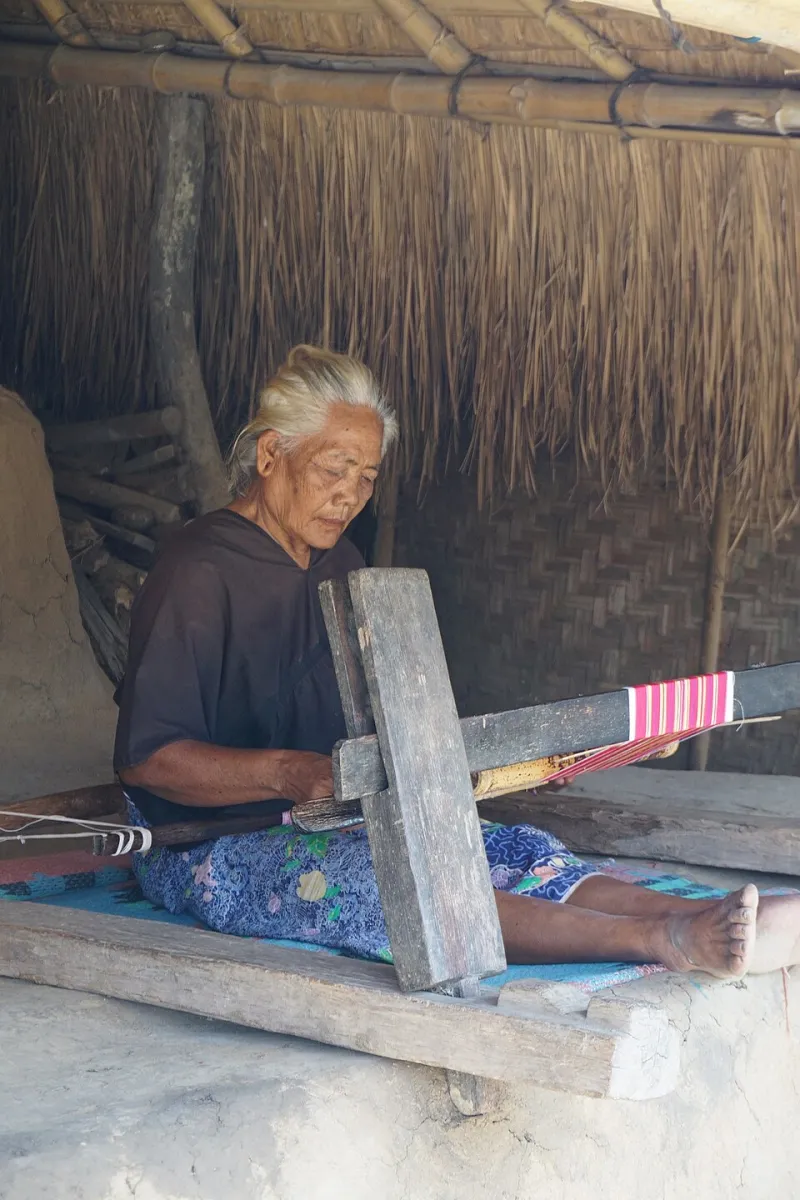
Photo: Johannnindito Adisuryo (Yohanes Nindito Adisuryo), CC BY-SA 4.0, via Wikimedia Commons
When Marge Kowalski retired from the post office in 2019, her plan was modest: putter in the garage, maybe take up a hobby, keep busy. She had no idea she was about to become the most important preservationist of an American craft that had, by every reasonable measure, already ended.
A Craft With No One Left to Teach It
The trade was hand-woven splint chair seating — the intricate cane-and-splint work that turned ordinary chairs into heirlooms across rural America for two centuries. If you've ever sat in a rocking chair with a woven seat at your grandmother's house, you've touched this craft.
By the time Kowalski stumbled into it, the field was functionally extinct. The last master weavers in her region of the Midwest had died within a few years of each other. The two dedicated workshops in the state had closed — one in the 1990s, one shortly after. Museums had examples. YouTube had fragments. Nobody had the living chain of knowledge that turns a museum piece into a working skill.
Kowalski's entry point was embarrassingly ordinary: a $4 rocking chair at a garage sale with a broken woven seat. She figured she'd watch a video, fix it, done.
The video was wrong. Or at least, incomplete. And that incompleteness became her life's second act.
Learning From Fragments
Here's what reconstructing a dead craft actually looks like: it looks like archaeology with a WiFi router.
Kowalski pieced the knowledge together from sources no single expert would have considered adequate. Depression-era farming manuals with hand-drawn diagrams. A 1970s extension-office pamphlet from a land-grant university, scanned and uploaded by an archivist. Grainy home movies of a Kentucky weaver, filmed by his grandson in the 1980s, uploaded in three parts with the middle part missing. And, crucially, the YouTube comment sections — where retired weavers, hobbyists, and the occasional descendant of a master craftsman would surface to correct, confirm, or remember.
One comment thread alone, under a decade-old video with 12,000 views, contained a correction about splint-soaking times that Kowalski says "unlocked the whole thing." The commenter had learned from her father, a furniture repairman in Ohio. She'd never written anything down. Neither had he.
This is the strange gift of the internet age: the knowledge didn't survive in institutions, but it survived in scattered form — in comments, in scans, in grandkids' phone videos. No museum had it. But distributed across thousands of small memories, it was nearly complete. It just needed someone stubborn enough to gather it.
The Garage Becomes a Workshop
Kowalski's tools came mostly from estate sales and thrift stores — a $12 spoke shave, a battered soaking trough that had clearly outlived its first three owners, an antique bench she drove four hours to collect from a barn in Indiana. Her first dozen attempts were, by her own cheerful admission, disasters. Splint work punishes imprecision; a seat that looks fine wet can sag or split within weeks.
But she kept a log — the way any good researcher would. What worked, what split, what the humidity did. After two years, she was producing work that a museum conservator who examined photos described as "indistinguishable in technique" from period examples.
Then came the requests. Antique dealers found her through a regional crafts forum. Historical societies asked about restoration work on WPA-era furniture. A state folklife program called, wanting to document the technique before — they assumed — it vanished again.
Teaching What She Reconstructed
The most remarkable part of the story isn't the restoration work. It's the teaching.
Kowalski now runs a small online community — part forum, part video library, part living archive — where she's documented the full process step by step, including the wrong turns, because she knows better than anyone that the wrong turns are where the knowledge hides. Roughly forty students have completed seats under her guidance. Three are now taking paid restoration work.
Three doesn't sound like much. For a craft with zero practitioners five years ago, it's a miracle of continuity.
Unlikely Beginnings Don't Expire
We tell stories about young prodigies because they're dramatic, but the math of human accomplishment doesn't actually favor them as much as we assume. Kowalski was 68 when she wove her first seat. She had no relevant background, no mentor, no institutional support, and a toolkit that cost less than a nice dinner.
What she had was time, patience, and access — access to a scattered digital commons that no previous generation of self-taught craftspeople ever had. The masters died without successors, but they didn't die without traces. It took a retiree with a garage sale chair to follow the traces all the way back.
The rocking chair that started it all sits on her porch now, seat tight and golden in the sun. She'll tell you it's crooked in two places, and she'll point out exactly where, and she'll tell you that's why she keeps it — as a reminder that the person who knows exactly how a thing is imperfect is usually the person who understands it best.
Somewhere out there is another dead or dying craft, another scattered archive of comments and scans, and probably another retiree with nothing better planned. The beginnings, it turns out, are always available. You just have to show up for them.