From Switchboard to Breakthrough: The Phone Operator Who Outsmarted the Engineers
The Voice Behind the Innovation
Dorothy Martinez arrived at Westinghouse Electric Corporation's Pittsburgh headquarters every morning at 7:30 sharp, took her position at the sprawling switchboard console, and spent the next eight hours routing calls between engineers, managers, and production supervisors. For three years, she was the invisible voice connecting conversations across one of America's largest manufacturing companies.
 Photo: Dorothy Martinez, via www.uclahealth.org
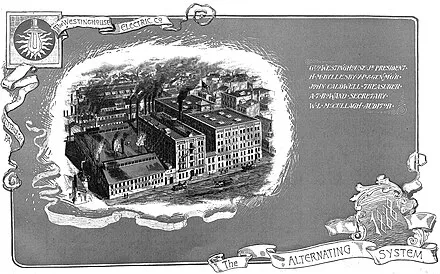 Photo: Westinghouse Electric Corporation, via upload.wikimedia.org
What nobody realized was that Dorothy was also listening—really listening—to what those conversations revealed about a problem that was costing Westinghouse millions of dollars and stumping their most brilliant minds.
The $50 Million Headache
By 1952, Westinghouse was hemorrhaging money on their new turbine generator production line. The massive machines, designed to power electrical grids across America, were failing quality tests at an alarming rate. Roughly 30% of units showed microscopic stress fractures in their rotors—flaws so small they were invisible to the naked eye but catastrophic enough to cause complete system failures.
The company's engineering department had thrown everything at the problem. They'd redesigned the metallurgy, adjusted the heat treatment processes, brought in consultants from MIT and Carnegie Tech. Nothing worked. The fractures kept appearing, seemingly at random, turning what should have been Westinghouse's most profitable product line into an expensive disaster.
The Patterns Only She Could See
From her switchboard position, Dorothy heard it all. Engineers calling the foundry about temperature inconsistencies. Production managers complaining about scheduling delays. Quality control supervisors reporting another batch of failed units.
But Dorothy heard something else—a pattern that emerged only when you listened to dozens of conversations every day for months on end. The failed units weren't random. They corresponded to specific shifts, specific days, specific weather conditions.
"I started keeping notes," Dorothy later recalled. "Just little things I'd jot down between calls. Which supervisor was calling, what time of day, what they were complaining about. After a while, I could almost predict when the bad batches would show up."
The pattern was subtle but unmistakable: stress fractures appeared most frequently in rotors cast during the overnight shift on humid summer evenings.
Speaking Up (and Being Shot Down)
Dorothy spent weeks debating whether to say anything. She was a 28-year-old switchboard operator with a high school education. The engineers she connected calls for had advanced degrees from prestigious universities. Who was she to suggest they'd missed something obvious?
Finally, she approached her supervisor, Helen Morrison, with her observations. Morrison listened politely, then delivered the crushing response: "Dorothy, I appreciate your interest, but engineering problems are handled by engineers. Your job is to connect calls, not solve manufacturing issues."
The message was clear: stay in your lane.
The Midnight Investigation
But Dorothy couldn't let it go. The pattern was too clear, the correlation too strong. If she was right, she might be sitting on the solution to a problem that had stumped Westinghouse's best minds for years.
Using her employee ID badge, Dorothy began arriving at the plant during overnight shifts, telling the security guards she was picking up overtime hours. Instead, she was conducting her own investigation.
What she discovered in the foundry changed everything.
The overnight crew had developed an unofficial workaround for the building's inadequate ventilation system. During humid summer nights, when the foundry became unbearably hot, workers would prop open the massive loading dock doors to create cross-ventilation. The problem was that this also allowed humid outside air to mix with the controlled atmosphere around the cooling rotors.
The microscopic water vapor was creating hydrogen embrittlement in the metal—a phenomenon that occurred only under very specific temperature and humidity conditions. The engineers had been looking for complex metallurgical solutions to what was essentially an HVAC problem.
Filing the Patent That Shouldn't Have Existed
Armed with her evidence, Dorothy approached the engineering department directly. This time, she didn't go through supervisors or follow proper channels. She walked into the office of Chief Engineer Robert Kellerman and presented her findings.
Kellerman was skeptical but agreed to test her theory. Within two weeks, they'd confirmed that controlling humidity during the cooling process eliminated the stress fractures entirely. The solution was embarrassingly simple: better ventilation control and monitoring equipment that cost less than $50,000 to implement.
What happened next was unprecedented. Despite having no formal technical training, Dorothy had identified the root cause of a problem that had cost Westinghouse millions. Her solution was so elegant and obvious in hindsight that the company decided to file for a patent.
Patent US2,789,634, filed in Dorothy Martinez's name, covered "Method and Apparatus for Controlling Atmospheric Conditions in Metal Cooling Processes." She became one of the first non-engineer employees in Westinghouse history to hold a manufacturing patent.
The Promotion That Almost Wasn't
The patent filing created an awkward situation for Westinghouse management. They had a switchboard operator who'd solved their most expensive engineering problem, but no clear career path for someone with her unique combination of observational skills and lack of formal credentials.
The solution was to create a new position: Quality Assurance Liaison. Dorothy would work directly with engineering teams, using her pattern-recognition abilities to identify potential problems before they became expensive disasters. It was a role that hadn't existed before because nobody had imagined that some of the most valuable insights might come from the person connecting the phone calls rather than making them.
Beyond the Breakthrough
Dorothy's success opened doors for other non-traditional problem-solvers at Westinghouse. The company began actively soliciting input from production workers, maintenance staff, and administrative employees—people who saw the manufacturing process from angles that engineers missed.
Her patent generated significant royalties, which Westinghouse shared with her through a new employee innovation program. More importantly, it established a principle that would influence manufacturing culture for decades: proximity to a problem often matters more than credentials when it comes to finding solutions.
The Lesson in the Switchboard
Dorothy Martinez's story reveals something profound about innovation and expertise. While the engineering establishment was focused on complex technical solutions, the answer was hiding in plain sight—visible only to someone who spent her days listening to the conversations that revealed the real patterns.
Her breakthrough wasn't the result of advanced education or sophisticated analysis. It came from careful observation, systematic thinking, and the willingness to trust her instincts even when everyone else dismissed them.
Today, Dorothy's patent is cited in dozens of subsequent innovations in industrial process control. Her approach—using communication patterns to identify systemic problems—became a standard methodology in quality assurance.
The switchboard operator who was supposed to just connect calls had connected something far more valuable: the dots that everyone else had missed.