He Never Finished High School. He Helped Build the Most Powerful Rocket in History.
He Never Finished High School. He Helped Build the Most Powerful Rocket in History.
When most people picture the engineers who built the Saturn V rocket, they see something specific: a row of white-shirted men in skinny ties, clipboards in hand, staring at a blackboard covered in equations. Maybe they picture Wernher von Braun, the charismatic German rocket scientist who led NASA's Marshall Space Flight Center and became the public face of America's Moon program.
That image isn't wrong, exactly. It's just incomplete. Because behind the physicists and aeronautical engineers, behind the slide rules and the trajectory calculations, there was another workforce — quieter, less celebrated, and arguably just as essential. These were the machinists, the welders, the toolmakers, and the hands-on mechanical problem-solvers who turned theoretical blueprints into actual hardware. Men and women who, in many cases, had learned everything they knew not in a classroom but on a shop floor.
John C. Lee was one of them.
Growing Up Hungry in Alabama
Lee grew up in rural Alabama in the 1930s and '40s, in a world that offered very few ladders up and a great many trapdoors down. His family didn't have money. School was available in theory but unreliable in practice — farm work, family obligations, and the basic economics of poverty had a way of interrupting education. He left school before finishing, the way a lot of kids in his circumstances did, without much expectation that it would define his ceiling.
What he had, from early on, was a gift for understanding how things worked. Engines, mechanisms, systems with moving parts — he had an intuitive feel for them that didn't come from books. He spent his early adulthood doing the kind of work available to a young man in his position: odd jobs, mechanical work where he could find it, learning by doing because doing was what was available.
The opportunity that changed everything came through Redstone Arsenal, the Army missile program based in Huntsville that eventually became the nucleus of NASA's Marshall Space Flight Center. Huntsville in the late 1950s was transforming rapidly from a sleepy north Alabama city into the unlikely headquarters of American rocket science. The program needed engineers and scientists, yes — but it also desperately needed skilled tradespeople, machinists, and technical workers who could actually fabricate and assemble the hardware those engineers were designing.
Lee got in the door. And once he was in, he was exactly the kind of person the program needed.
The F-1 Engine Problem
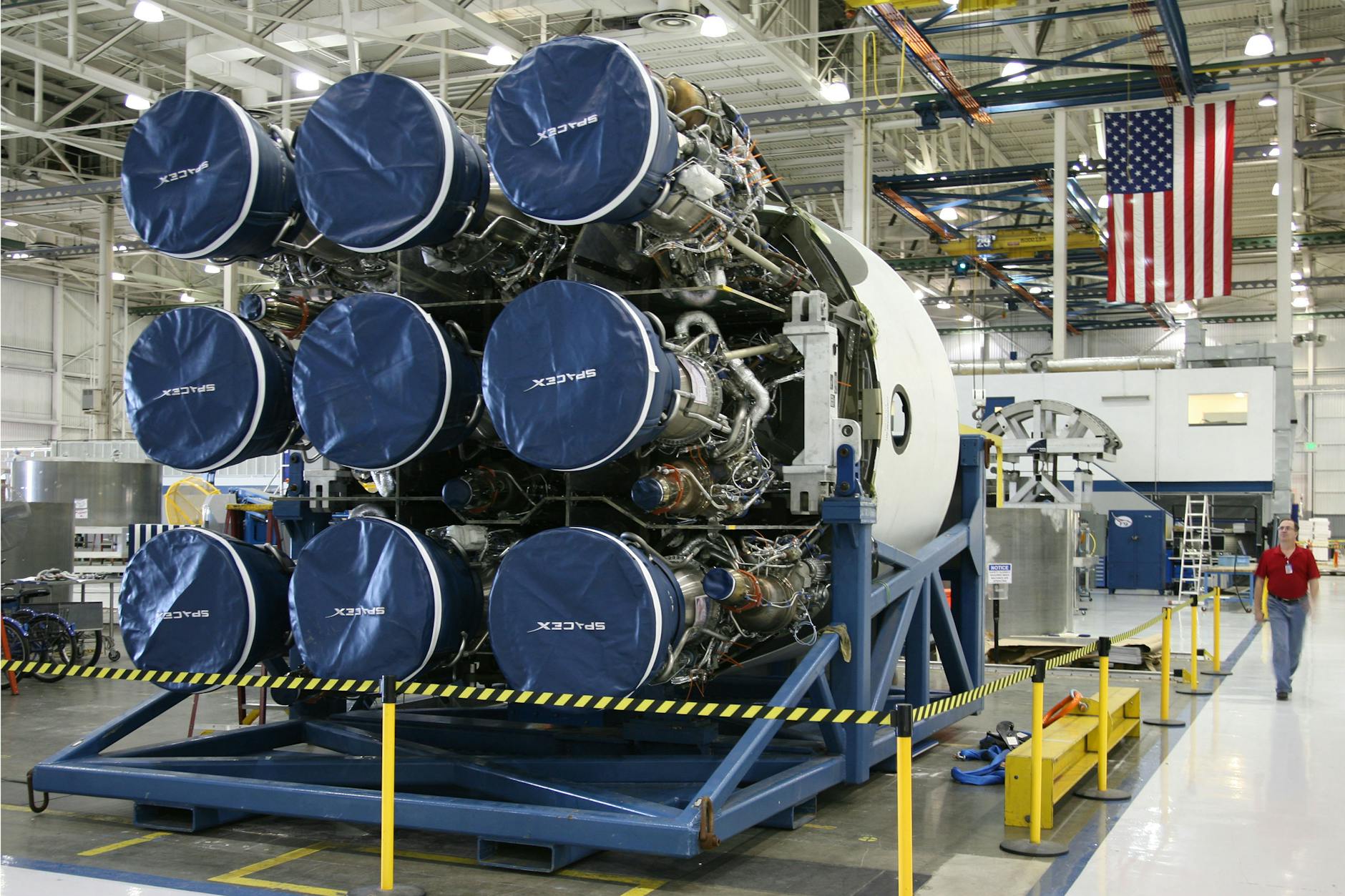
The Saturn V rocket that carried Neil Armstrong to the Moon remains, more than half a century later, the most powerful launch vehicle ever successfully flown. Its first stage was powered by five F-1 engines, each one producing 1.5 million pounds of thrust. Clustered together, they generated more power than the entire Hoover Dam.
Building them was a nightmare.
The F-1 engine's development was plagued by a particularly vicious problem: combustion instability. The engines kept destroying themselves during test fires, the result of feedback oscillations in the combustion chamber that would amplify into catastrophic pressure waves in a fraction of a second. Solving it was one of the most difficult engineering challenges of the entire Apollo program — and the solution didn't come purely from theoretical analysis. It came from a grinding, iterative process of building, testing, failing, modifying, and testing again.
This is where people like Lee became indispensable. The gap between a design on paper and a component that actually worked in a 1.5-million-pound-thrust environment was enormous, and bridging it required a kind of practical knowledge that no university curriculum had yet figured out how to teach. It lived in the hands of people who had spent years learning the behavior of metal under stress, who could look at a failed component and read what had happened to it, who understood tolerance and fit and material behavior the way a musician understands rhythm — not as abstract principle, but as lived experience.
"The machinists were solving problems the engineers didn't even know existed yet," one Marshall veteran recalled in an oral history project years later. That dynamic — formal training and practical knowledge working in constant, sometimes tense dialogue — defined the culture of Marshall Space Flight Center during the Apollo years.
The Huntsville Ecosystem
Lee's story isn't unique; it's representative. Marshall during the Space Race drew heavily from the surrounding region's existing industrial workforce — people with backgrounds in textile manufacturing, mining equipment, automotive work, and military hardware. Many had learned their trades through apprenticeships or simply by showing up and refusing to leave until they understood something.
The program also benefited, in ways that aren't always acknowledged, from the labor of Black workers in the segregated South. Huntsville's workforce was shaped by Jim Crow in deeply complicated ways — Black workers were often confined to lower-status positions regardless of their skill level, and the story of who got credit for what in that environment is not a simple one. The full accounting of who built the Saturn V has never quite been written.
What is clear is that the Moon program was, at its core, a manufacturing achievement as much as a scientific one. The F-1 engine alone had approximately 2,500 parts. The Saturn V as a whole had around 3 million. Every one of those parts had to be made, inspected, assembled, and verified by human hands. The people doing that work weren't interchangeable — the tolerances were too tight, the stakes too high, the problems too novel for anyone who was just punching a clock.
What the Shop Floor Knew
There's a concept in engineering sometimes called "tacit knowledge" — the kind of understanding that can't be fully written down or transferred through instruction, but has to be developed through direct experience. It's the welder who can feel when a joint is right before the test confirms it. The machinist who hears something wrong in a lathe before the measurement shows it. The technician who has run enough tests to recognize a pattern that doesn't appear in any manual.
The Apollo program ran on tacit knowledge. The engineers provided the vision and the mathematics. The shop floor provided the reality check — the constant, unglamorous feedback loop that turned theoretical designs into hardware that could survive the most hostile environment human beings had ever tried to operate in.
John Lee never wrote a paper. He never gave a press conference. When the Saturn V lifted off on July 16, 1969, carrying Armstrong, Buzz Aldrin, and Michael Collins toward the Moon, his name wasn't in the broadcast. It wasn't in the history books that followed.
But his hands had been on the engine.
The Lesson That Doesn't Fit on a Bumper Sticker
The story of the Moon landing is often told as a triumph of American ambition, of presidential vision, of scientific brilliance. All of that is true. But it's also a story about what happens when a society decides something is important enough to invest in every kind of human capability — not just the kind that comes with a diploma.
The men and women on the shop floor at Marshall weren't there despite their unconventional backgrounds. In many cases, they were there because of them. The intuition built through years of hands-on problem-solving, the comfort with failure and iteration, the ability to work with incomplete information and still make a decision — these are hard things to teach in a classroom. They're much easier to develop by actually doing the work.
America went to the Moon on the strength of university labs and government contracts, yes. But it also went on the strength of people like John C. Lee, who never finished high school and spent their lives getting very, very good at something the textbooks hadn't caught up to yet.