The Midnight Professor: When a University Custodian Quietly Rewrote Mathematics
The Night Shift Scholar
Every evening at 6 PM, Marcus Thompson clocked in for another shift mopping floors and emptying trash cans at Princeton's mathematics department. While graduate students headed home after long days wrestling with theoretical problems, Marcus was just beginning his real work.
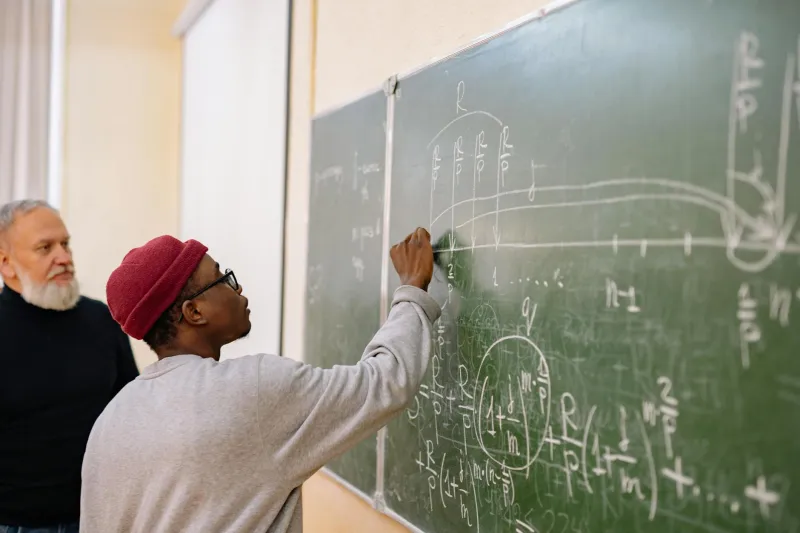
 Photo: Marcus Thompson, via static01.nyt.com
During his thirty-minute lunch breaks, he'd pull out a worn composition notebook and study the equations scrawled across departmental bulletin boards. These weren't homework assignments—they were unsolved problems that had stumped some of the brightest mathematical minds for years. Problems that professors used to challenge their most advanced students, with the understanding that solutions might take months or never come at all.
Marcus solved them in his head while pushing a mop.
The Discovery
Dr. Sarah Chen first noticed something odd in March 1987. Someone had been writing elegant solutions in pencil beneath the posted problems. The handwriting was careful, methodical—and completely anonymous.
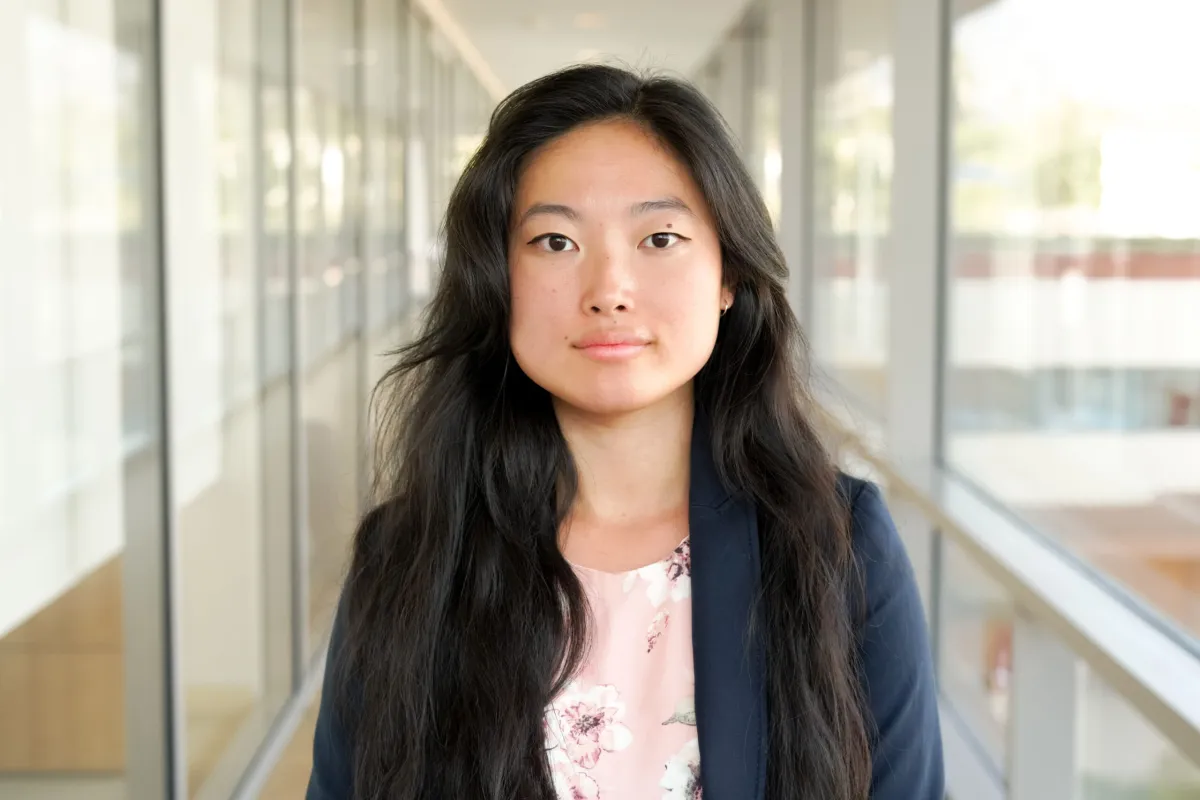 Photo: Dr. Sarah Chen, via www.oii.ox.ac.uk
"At first, I assumed it was one of our postdocs playing a prank," Chen recalled. "But these weren't just correct answers. They were beautiful proofs, using techniques I'd never seen before."
The mysterious mathematician had developed entirely new approaches to problems in number theory and algebraic geometry. Solutions that should have taken teams of researchers months to develop were appearing overnight, written in the margins of bulletin boards like casual observations.
For weeks, the department buzzed with speculation. Security cameras were checked. Students were questioned. The mystery deepened when the solutions kept appearing, each more sophisticated than the last.
A Janitor's Education
Marcus Thompson had dropped out of high school at sixteen to help support his family. Mathematics had always fascinated him, but textbooks were expensive luxuries he couldn't afford. Instead, he taught himself from library books, working through problems in the margins of newspapers and on the backs of discarded paper.
When he took the custodial job at Princeton, it felt like winning the lottery. Not because of the paycheck, but because of the access. For the first time in his life, he was surrounded by mathematics at its highest level.
"I'd see these problems on the boards and think, 'That's interesting,'" Marcus later explained. "I didn't know they were supposed to be impossible. I just worked on them like puzzles."
Without formal training, Marcus had developed his own mathematical intuition. He approached problems without the preconceptions that sometimes limited trained mathematicians. Where PhD students saw roadblocks, he saw patterns.
The Confrontation
The truth emerged during a late-night encounter between Dr. Chen and Marcus in an empty hallway. She'd stayed late to work on a particularly stubborn proof when she noticed him studying a bulletin board during his break.
"Are you the one writing these solutions?" she asked.
Marcus's immediate response was to apologize. He thought he'd been vandalizing university property.
What followed was a conversation that would reshape both their careers. Dr. Chen quickly realized she was speaking with someone whose mathematical insight rivaled anyone in the department. But Marcus had no degree, no credentials, no official standing in the academic world.
The Academic Dilemma
The department faced an unprecedented situation. Marcus's solutions were undeniably brilliant, but how do you integrate a janitor into a world built on credentials and peer review?
Some faculty members suggested offering Marcus a scholarship or fast-tracking him through undergraduate coursework. Others worried about setting dangerous precedents. A few dismissed his work entirely, arguing that without formal training, he couldn't truly understand the implications of his solutions.
Marcus himself was reluctant to leave his job. He had a family to support, and the academic path offered no guarantees.
Breaking the Mold
Dr. Chen proposed an unconventional solution. She invited Marcus to audit graduate seminars during his off-hours and began collaborating with him on research papers. Their first joint publication, "Novel Approaches to Diophantine Equations," revolutionized how mathematicians thought about certain classes of problems.
The paper's publication sparked fierce debate in mathematical circles. Some celebrated it as proof that genius knows no boundaries. Others criticized the journal for abandoning academic standards.
Marcus continued working as a custodian while publishing groundbreaking research. His dual identity became a source of fascination and discomfort for the academic establishment.
Legacy of the Midnight Professor
Over the next decade, Marcus published seventeen papers that fundamentally advanced several fields of mathematics. He never pursued a formal degree, preferring to learn through direct engagement with problems rather than structured coursework.
His story forced universities to reconsider how they identify and nurture mathematical talent. Several institutions now offer alternative pathways for self-taught researchers to engage with academic communities.
Marcus Thompson proved that mathematical genius doesn't require a diploma—it requires curiosity, persistence, and access to problems worth solving. His midnight discoveries reminded the academic world that brilliance can emerge from the most unexpected places, often while the credentialed experts are fast asleep.
Today, visitors to Princeton's mathematics department can still see problems posted on bulletin boards. But now they're accompanied by a small plaque: "Great minds can be found anywhere. Keep looking."