When Love Became Science: The Father Who Solved What Medical School Couldn't
The Night Everything Changed
David Martinez was elbow-deep in suds at Romano's Italian Kitchen when his wife called. Their four-year-old daughter Sofia had collapsed again — the third time that month. By the time he made it to the hospital, Sofia was awake but exhausted, her tiny body betraying her in ways no one could explain.
The emergency room doctor delivered the same verdict they'd heard a dozen times before: "We're stumped. Her symptoms don't match anything we know."
For most parents, that would be devastating but final. For David, it was the beginning of an obsession that would consume the next three years of his life — and accidentally revolutionize how doctors think about a rare genetic disorder.
When the Experts Give Up
Sofia's symptoms read like a medical riddle written by a cruel comedian. Muscle weakness that came and went without warning. Seizures that didn't respond to standard treatments. Blood work that showed everything and nothing at once. Over eighteen months, the Martinez family had seen neurologists, geneticists, and specialists whose names David couldn't pronounce.
Each appointment followed the same script: thoughtful nodding, expensive tests, and ultimately, apologetic shrugs. "Sometimes," one particularly honest doctor told them, "medicine just doesn't have answers yet."
But David wasn't built for acceptance. Growing up in East Los Angeles, he'd learned that when the system fails you, you figure it out yourself. So while Sofia slept, David studied.
 Photo: East Los Angeles, via www.coastalcapital.com
The Dishwasher's Medical School
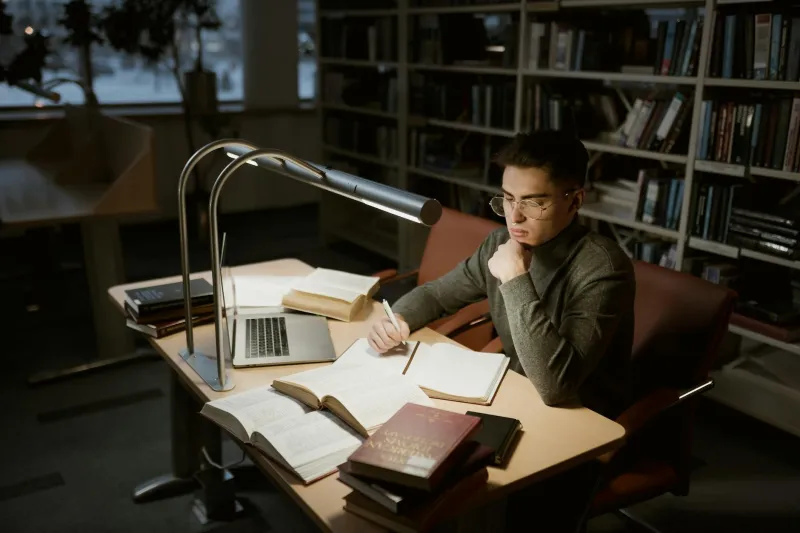
Every night after his shift at Romano's, David would drive to the UCLA medical library. The security guard eventually stopped asking for his student ID — David had convinced him he was a "part-time researcher." Technically true, if you counted desperation as a research methodology.
David's approach was unscientific but systematic. He printed every medical journal article that mentioned Sofia's symptoms, creating stacks of papers that soon took over their kitchen table. He taught himself to decode medical terminology using online dictionaries and YouTube videos made for nursing students.
"I probably looked like a crazy person," David admits now. "I had these giant flowcharts mapping Sofia's symptoms against every rare disease I could find. My wife thought I was losing it."
What David lacked in formal training, he made up for with pattern recognition honed by years of managing kitchen inventory and staff schedules. He began to notice connections that individual specialists, focused on their narrow expertise, had missed.
The Breakthrough in Aisle Seven
The eureka moment came at 2 AM in a Walmart pharmacy. David was picking up Sofia's latest prescription when he spotted a medical reference book on the discount rack. Flipping through it while waiting in line, he stumbled across a description of Glut1 deficiency syndrome — a disorder so rare that most doctors never encounter it.
The symptoms aligned with Sofia's condition like puzzle pieces clicking into place. But Glut1 deficiency supposedly caused constant seizures, not the intermittent episodes Sofia experienced. According to every medical text, her pattern of symptoms was impossible.
David's breakthrough insight was embarrassingly simple: What if the textbooks were wrong?
When Amateur Hour Meets Medical School
David's research had led him to Dr. Rebecca Chen at Children's Hospital of Philadelphia, one of the world's few Glut1 specialists. His initial email was a rambling, desperate plea filled with medical terminology he'd clearly learned from Google.
 Photo: Children's Hospital of Philadelphia, via architizer-prod.imgix.net
Dr. Chen almost deleted it. "I get a lot of emails from parents who think they've figured out their child's diagnosis," she explains. "But something about David's message was different. He wasn't just guessing — he'd done real research."
A phone call turned into a consultation. Dr. Chen flew to Los Angeles to examine Sofia personally, bringing genetic testing equipment that most hospitals didn't own. The results confirmed David's amateur diagnosis: Sofia had an extremely rare variant of Glut1 deficiency that presented differently than any case in the literature.
Rewriting the Textbooks
Sofia's case became the subject of a groundbreaking medical paper published in the Journal of Inherited Metabolic Disorders. David Martinez, dishwasher and high school dropout, was listed as a co-author — a nearly unprecedented honor for someone without medical credentials.
The paper didn't just describe Sofia's unique presentation; it challenged fundamental assumptions about how Glut1 deficiency manifests. Dr. Chen's team discovered that David's "impossible" symptom pattern actually occurred in roughly 15% of Glut1 cases — doctors had simply been missing it because they didn't know to look for it.
"David's persistence saved his daughter, but it also saved future children who might have gone undiagnosed," Dr. Chen says. "His case study has become required reading in pediatric neurology programs."
The Ripple Effect
Today, Sofia is a healthy twelve-year-old whose seizures are controlled by a specialized diet that manages her glucose transport deficiency. David still works at Romano's — he likes the steady schedule and health insurance — but he's also become an unofficial consultant for families dealing with rare diseases.
His story has inspired the creation of "diagnostic partnerships" at several major medical centers, where particularly puzzling cases are opened to input from patients and families. It turns out that people living with a condition 24/7 sometimes notice patterns that doctors, seeing patients for 15-minute appointments, miss entirely.
The Lesson in the Suds
David's journey from dishwasher to medical pioneer illustrates something profound about how discovery actually works. While medical school teaches doctors to think systematically, it can also teach them to think inside established boxes. David's advantage wasn't education — it was desperation combined with the outsider's willingness to question everything.
"I wasn't trying to prove anything to anybody," David reflects. "I just needed my daughter to get better. Sometimes that's the purest kind of science there is."
In a world where we often assume expertise requires credentials, David Martinez proved that sometimes the most important qualification is simply refusing to accept that there are no answers. His story reminds us that love, persistence, and pattern recognition can be just as powerful as any medical degree — and occasionally, they're exactly what science needs to move forward.