The Chicken Farm That Changed Psychiatry Forever — One Man, No Budget, and the Discovery That Saved Millions

A Hospital Unlike Any Other
Picture the setting for one of the twentieth century's most important medical breakthroughs: a repurposed storage shed on the grounds of the Bundoora Repatriation Mental Hospital outside Melbourne, Australia. The year is 1948. The lab equipment is basic to the point of being almost laughable. The researcher has no grant money, no university affiliation, and no team. There are chickens wandering the hospital grounds.
 Photo: Bundoora Repatriation Mental Hospital, via s3-ap-southeast-2.amazonaws.com
This is where John Cade figured out how to treat bipolar disorder.
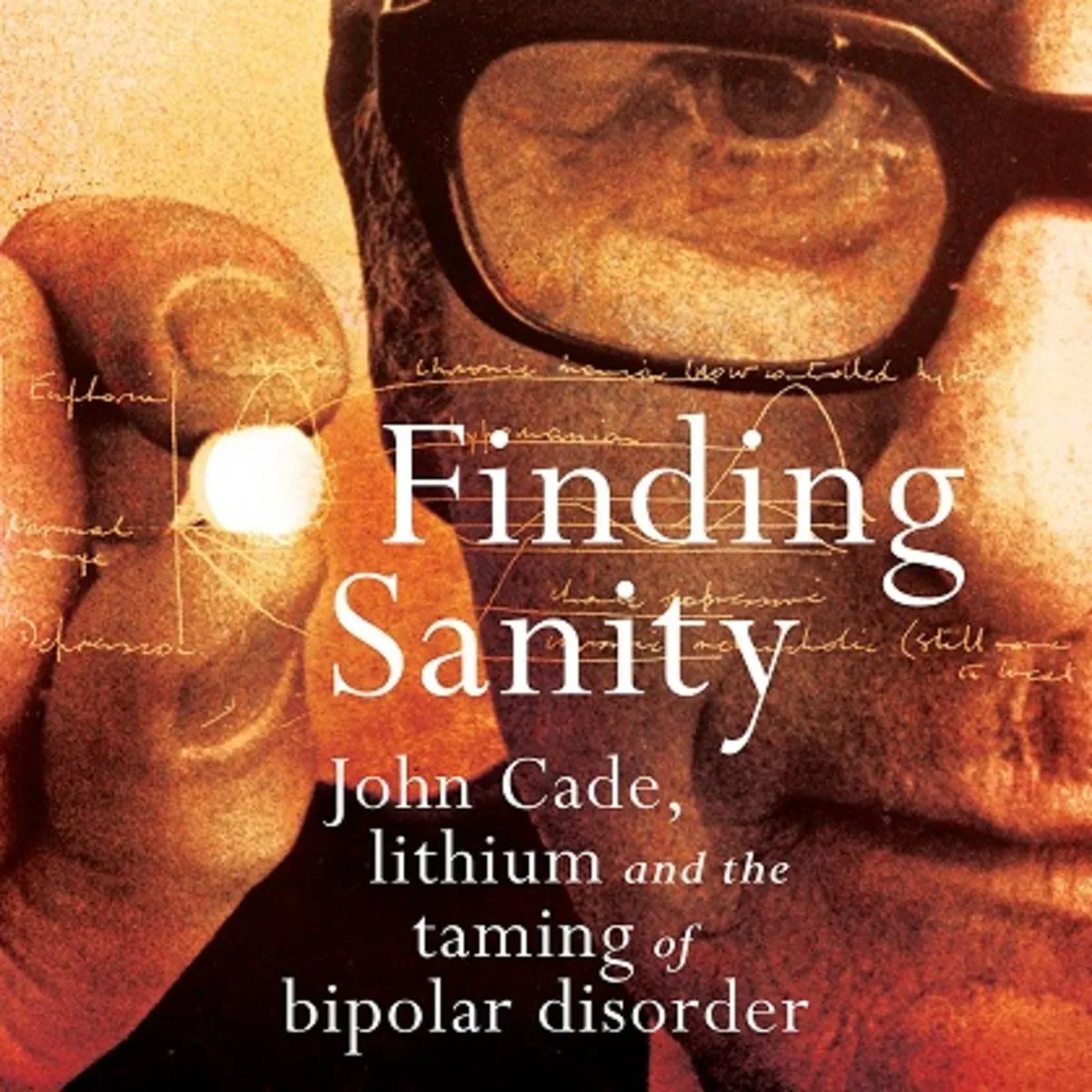 Photo: John Cade, via 1.bp.blogspot.com
Today, lithium is prescribed to millions of people worldwide. It has pulled countless individuals back from the edge of devastating manic episodes and crippling depressive crashes. It is considered a foundational medication in modern psychiatry. And it was discovered by a man who was, by every conventional measure of the research establishment, a nobody.
The Outsider's Hypothesis
Cade hadn't always worked in obscurity. He'd served as a military doctor during World War II, spending time as a prisoner of war in the brutal Changi camp in Singapore. The experience left him with a profound and personal understanding of how extreme stress breaks the human mind — and a determination to understand why some people seemed to suffer mental illness more severely than others.
 Photo: Changi camp, via s3-ap-southeast-2.amazonaws.com
His working theory, developed largely through observation rather than formal research, was that severe mania might be caused by some kind of toxic substance building up in the body. If that were true, he reasoned, it might show up in urine. He began collecting urine samples from patients with different psychiatric conditions and injecting them into guinea pigs to see what happened.
It was not glamorous science. It was not the kind of work that gets you invited to conferences. But Cade was methodical, and he was curious, and he had something many well-funded researchers lacked: the freedom that comes with having nothing to lose.
The Accidental Property
Here's where the story takes a turn that sounds almost too convenient to be true — except it is.
To make uric acid soluble enough to inject, Cade needed a carrier compound. He chose lithium urate, partly because it was readily available. When he injected it into his guinea pigs, he noticed something unexpected: the animals became calm. Not sedated in the way a tranquilizer would cause — genuinely, peacefully calm. They remained alert and responsive, but the agitation was gone.
Cade had stumbled onto the calming properties of lithium almost by accident, while pursuing a completely different hypothesis. He ran more tests. The results held. In 1949, he cautiously began administering lithium carbonate to ten patients suffering from severe mania.
The results were remarkable. Patients who had been in states of frantic, uncontrollable excitement for years began to stabilize. One man who had been continuously manic for five years was well enough to leave the hospital and return to his job within two months of beginning treatment.
Cade published his findings in the Medical Journal of Australia that same year. It was a careful, quietly written paper. It described something that should have set the psychiatric world on fire.
Almost nobody read it.
The World Wasn't Ready
The reasons for psychiatry's indifference to Cade's discovery are worth sitting with, because they say something important about how medical progress actually works.
First, Cade was Australian, working outside the major research centers of Europe and the United States. In 1949, the flow of important medical ideas was largely assumed to run in one direction — from the prestigious institutions outward, not from a converted shed in Victoria.
Second, and more critically, lithium had a serious PR problem. In the late 1940s, several American patients had died after using lithium chloride as a salt substitute — a completely different application, at far higher doses, with no medical supervision. The FDA was deeply wary of the compound. The idea of prescribing it as a psychiatric medication felt reckless to many American doctors, regardless of what some unknown Australian was claiming.
Third — and this is perhaps the most human reason of all — there was no pharmaceutical company with a financial interest in promoting lithium. It's a naturally occurring element. It can't be patented. Nobody was going to get rich pushing it, so nobody was going to invest in the marketing campaigns that often drive medical adoption.
Cade's discovery sat largely ignored for nearly two decades.
The Long Road to Recognition
It was a Danish psychiatrist, Mogens Schou, who eventually ran the large-scale clinical trials in the 1950s and 1960s that gave Cade's findings the institutional weight they needed. Schou had personal reasons to pursue the research — his brother suffered from bipolar disorder — and he pushed hard against the skepticism of the medical establishment until the evidence became impossible to dismiss.
The FDA finally approved lithium as a treatment for mania in 1970. By that point, John Cade had been quietly practicing psychiatry in Melbourne for two decades, largely unknown outside Australia, having received almost none of the recognition his discovery deserved.
He eventually received some belated honors — the Kittay International Award in 1985, among others. He died in 1980, just as the full scale of lithium's impact on global mental health was becoming clear.
What His Story Tells Us
John Cade didn't work in the right country. He didn't have the right funding. He didn't publish in the right journals or move in the right circles. He ran his experiments on guinea pigs in a room near a chicken yard using equipment that most research institutions would have thrown away.
And he changed the lives of millions of people who will never know his name.
The history of medicine is full of stories like this — breakthroughs that arrived from unexpected directions, from people the establishment had no particular reason to listen to. What made Cade different wasn't genius in the Hollywood sense. It was stubbornness. Curiosity. And the peculiar advantage of working somewhere quiet enough that nobody told him what wasn't worth trying.