Thirty Rejections, One Breakthrough: The Independent Researcher Who Quietly Rewrote Cancer Biology

The envelopes came back one at a time, spread across nearly three years. Some were polite. A few were dismissive in the particular way that institutional form letters manage to be dismissive — impersonal, efficient, and somehow more deflating than outright hostility. Most said some version of the same thing: without a formal research affiliation, there was no framework for evaluating her submission. Without credentials, there was no conversation to be had.
Margaret Osei had a kitchen table, a secondhand microscope, and notebooks she'd been filling since the late 1970s. What she didn't have was a university address at the top of her letterhead, and in the world of academic biology, that absence was treated as disqualifying before anyone had read a single page of her work.
 Photo: Margaret Osei, via i.ytimg.com
What those thirty institutions turned away was an observation about cellular behavior in early-stage tumor environments that, once it finally reached the right reader, would reframe a key assumption in oncology research and contribute to treatment approaches now used in cancer centers across the country.
Where It Started
Osei had trained as a laboratory technician in the late 1960s, working for a research hospital in Ohio where her job was to prepare slides, maintain equipment, and keep the scientists' experiments running smoothly. She was good at it — meticulous, fast, reliable. She was also paying close attention to things that weren't technically her job to notice.
Over years of slide preparation, she began observing what she described in her notebooks as "irregular adhesion behavior" in certain cancer cell samples — instances where cells that should have been behaving according to established models were doing something else entirely. The pattern was subtle. Easy to dismiss as sample variance. Most of the researchers she worked for did dismiss it, when she mentioned it at all.
But Osei kept her own records. When she left the hospital in the mid-1970s to care for her mother, she took the habit with her. She bought used scientific journals. She borrowed textbooks from the public library. She set up the best workspace she could in a spare room and kept working through what she'd seen, cross-referencing her own observations against published literature, trying to understand whether what she'd noticed was noise or signal.
By the early 1980s, she was increasingly convinced it was signal.
The Mechanism She Found
Without getting lost in technical detail, what Osei had identified — painstakingly, through years of solo observation and self-directed research — was a pattern in how certain tumor cells interacted with adjacent healthy tissue in the very early stages of growth. Specifically, she documented what appeared to be a signaling behavior that allowed early-stage tumor cells to suppress a localized immune response, essentially quieting the body's own detection system before it could mount a meaningful reaction.
This wasn't a concept that existed in the published literature she was reading. The dominant models of the time treated early tumor development as a relatively passive process. The idea that tumor cells might be actively communicating with surrounding tissue to create a more hospitable environment — what researchers would later term aspects of the "tumor microenvironment" — was not yet part of the mainstream conversation.
Osei didn't have that language. She had her own language, developed in isolation, which made her notebooks harder to read for anyone trained in the conventional vocabulary of the field. But the underlying observation was there, documented across hundreds of pages with a precision that reflected decades of laboratory habit.
Thirty Doors, Thirty Closed
She began mailing her findings in 1983. Not the full notebooks — she was methodical enough to prepare a condensed summary, a kind of informal paper that laid out her observations, her methodology as best she could describe it, and her hypothesis about what the cellular behavior implied.
The responses, when they came, were almost uniformly the same. A few researchers wrote back personally; most did not. The consistent theme was institutional: without affiliation, without peer review, without the formal scaffolding that academic science requires, there was no mechanism for engaging with her work. Several letters noted that her methodology, however careful, couldn't be verified. One response, which she kept and later shared with a journalist, suggested she consider enrolling in a degree program if she wanted to pursue research seriously.
She was in her mid-forties by then. She had no money for tuition. She kept mailing letters.
The Professor Who Picked Up the Phone
The thirty-first letter went to a cellular biology professor at a mid-sized research university in the Southeast — a man named Dr. Clarence Webb who had a reputation among his graduate students for reading everything that crossed his desk, including the unsolicited mail that most academics routed directly to the recycling bin.
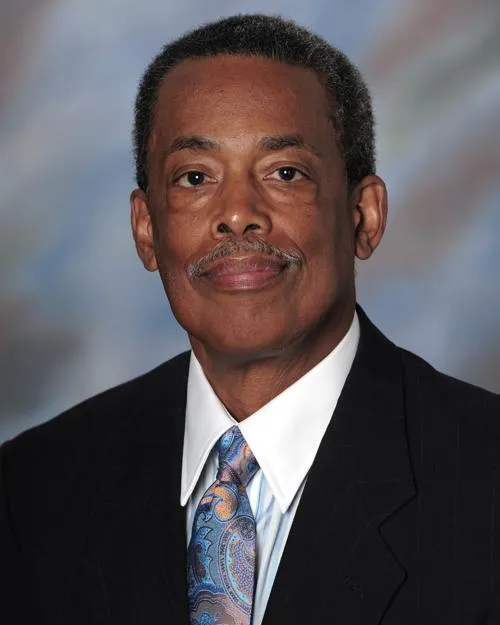 Photo: Dr. Clarence Webb, via dims.healthgrades.com
Webb later said he almost didn't read it. He'd had a long week. The envelope sat on his desk for four days. When he finally opened it, he read it twice, then went to find his department chair.
What followed wasn't immediate vindication. Webb was careful, appropriately skeptical, and aware of the risks of championing work that arrived without institutional backing. He spent several months corresponding with Osei, asking detailed questions, probing the consistency of her observations, and trying to determine whether what she'd documented held up under scrutiny.
It did. Webb brought her in as a visiting researcher — an unofficial arrangement that gave her access to a proper laboratory for the first time in years. Together, they designed a series of controlled experiments to test her hypothesis using methodology that the academic world would recognize. The results aligned with what she'd observed.
The paper they co-authored was published in 1989. Osei's name appeared second, a point of some later controversy given that the core observation was hers. But it was published, and it was read.
What Came After
The paper didn't immediately transform anything. Science rarely works that way. But it entered the conversation at a moment when other researchers were beginning to ask similar questions about the tumor microenvironment, and it contributed to a growing body of work that eventually shifted how oncologists think about early intervention and immune response in cancer treatment.
Osei was invited to speak at two conferences in the early 1990s. She received a small grant — the first external funding of her career. She published two more papers before her health declined in the late 1990s. She died in 2004, largely unknown outside a small circle of researchers who understood what she'd done.
A 2011 review article in a cancer biology journal cited her 1989 paper as one of the early contributions to the field's understanding of tumor-immune interaction. The citation was accurate. It was also, for many readers, the first time they'd encountered her name.
Why It Keeps Happening
Osei's story isn't a clean triumph. She got through eventually, which is more than many independent researchers manage. But the thirty rejections weren't incidental — they were the system working exactly as designed. Academic science filters for credentials because credentials are a reasonable proxy for rigor. The problem is that proxies fail, and when they fail, they don't fail randomly. They fail in patterns that tend to exclude people who are already outside the room.
The ideas don't care where they come from. The biology doesn't change depending on whether the person who noticed it has a faculty position. But the infrastructure that decides which ideas get tested, funded, and published cares enormously — and that gap between what an idea is worth and what the system is willing to consider is where a lot of important things quietly disappear.
Osei's notebooks are held by a university archive now. Thirty institutions said no to what was inside them. The thirty-first said yes, and the field is different for it.