They Got Fired Before They Got the Phone Call: Nobel Winners the World Wrote Off First
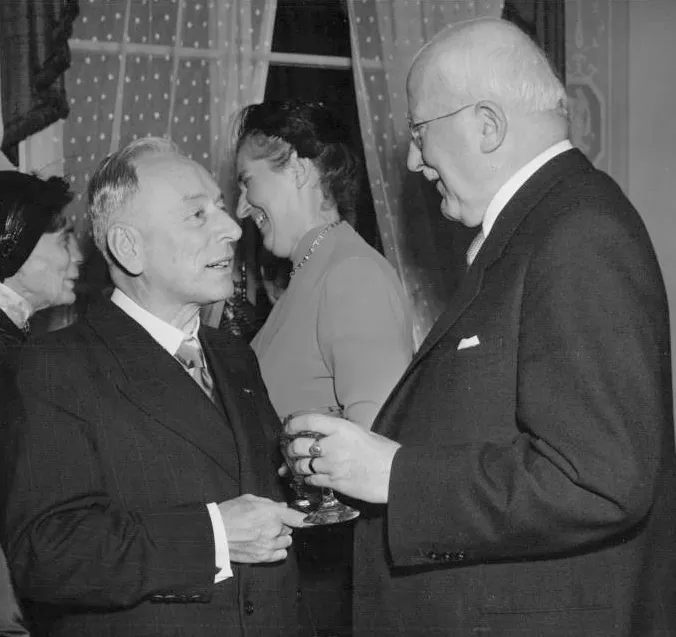
Photo: Unknown authorUnknown author, Public domain, via Wikimedia Commons
The Nobel Prize has a funny relationship with time. The awards are meant to honor the best of human achievement, but they often arrive decades after the work was done — long after the ridicule, the pink slips, and the professional exile. In some cases, the committee was congratulating people their own fields had thrown out the door.
Here are five laureates whose prize-winning work was done while their careers were, by any conventional measure, in ruins.
1. The Engineer Who Got Fired and Rewrote Physics
In the early 1950s, a young Japanese engineer named Leo Esaki was working at a Tokyo electronics firm when he noticed something strange in heavily doped semiconductor materials — an effect that shouldn't have existed according to the textbooks. His employer was skeptical but let him keep tinkering. When the company later hit hard times, his research was treated as a distraction, and the environment grew openly hostile to the work.
Esaki kept going anyway, eventually leaving Japan for the United States partly because American labs gave him more freedom to pursue the phenomenon. That "distraction" became the tunnel diode, and the underlying physics — quantum tunneling in semiconductors — became foundational to modern electronics. In 1973, he collected the Nobel Prize in Physics for work his first employer had nearly shelved.
2. Banned From Her Own Profession
No story in the Nobel archive cuts deeper than that of a Chinese pharmacologist whose findings were dismissed for years — and whose professional standing was stripped away during political turmoil just as she was doing her most important work.
Tu Youyou was part of a secret state project to find a malaria cure, screening thousands of traditional remedies when Western drugs were failing. Her breakthrough came from an ancient text and a low-temperature extraction technique — but because of the era's political chaos, her work couldn't be published internationally, her credentials were questioned, and at one point she was effectively barred from her professional institute.
The drug she helped develop, artemisinin, has saved millions of lives. She didn't receive the Nobel Prize in Physiology or Medicine until 2015 — and she had no doctorate, no overseas training, and no international publications to her name when the call came.Observers called her one of the most unconventional laureates in the prize's history. The committee, to its credit, didn't care.
3. Laughed Out of the Lecture Hall
Barry Marshall drank the bacteria on purpose. That's not a metaphor — the Australian physician, convinced that stomach ulcers were caused by Helicobacter pylori rather than stress, swallowed a culture of the bacterium when the medical establishment refused to take his hypothesis seriously. His findings, developed with pathologist Robin Warren, had been met with years of dismissal; one prominent researcher reportedly told him the idea was absurd.
Ulcers, the world had been told for a century, were caused by anxiety and spicy food. Billions in antacid sales said so. Marshall and Warren's work eventually overturned the entire paradigm — and earned the 2005 Nobel Prize in Medicine. Marshall's self-experiment is now legendary; his years of being treated as a crank are mostly forgotten.
4. The Paper That Got Rejected Everywhere
Peter Higgs — yes, that Higgs — faced a quieter form of rejection. His 1964 papers on the mechanism now bearing his name were initially met with indifference, and one early submission was actually rejected by a journal editor who saw no physical relevance to the mathematics. For decades, the theory sat in the "interesting but unproven" pile of physics.
It took nearly fifty years, and a particle collider under the French-Swiss border, before the Higgs boson was confirmed in 2012. The Nobel arrived in 2013, when Higgs was 84.
5. Fired at 65, Famous at 70
American economist Elinor Ostrom spent years being told her field — the study of how communities manage shared resources — wasn't "real" economics because it relied on fieldwork rather than elegant models. Her department originally wouldn't even hire her into an economics post; she spent much of her career in a political science unit, working at the margins of the discipline that eventually claimed her.
In 2009 she became the first woman to win the Nobel Prize in Economic Sciences — an honor that arrived when she was 76, after a lifetime of being told her methods were unrigorous.
What the Hindsight Tells Us
The Nobel committee's delays aren't just bureaucratic caution. They're a mirror. Every one of these laureates was overlooked in real time by the same institutions that later celebrated them — fired, banned, rejected, or laughed at by peers who were certain the consensus was correct.
The lesson isn't "trust the maverick." Plenty of mavericks are simply wrong. The lesson is that our systems for recognizing good work are calibrated to reward people who already look the part. Change the packaging — wrong country, wrong field, wrong methods, wrong decade — and even world-class work can sit unnoticed for fifty years.
Stockholm's phone calls are worth celebrating. It's worth remembering who wasn't answering the phone back then.