When the Airwaves Saved a Town: The Broadcaster They Rejected Who Became a Hero
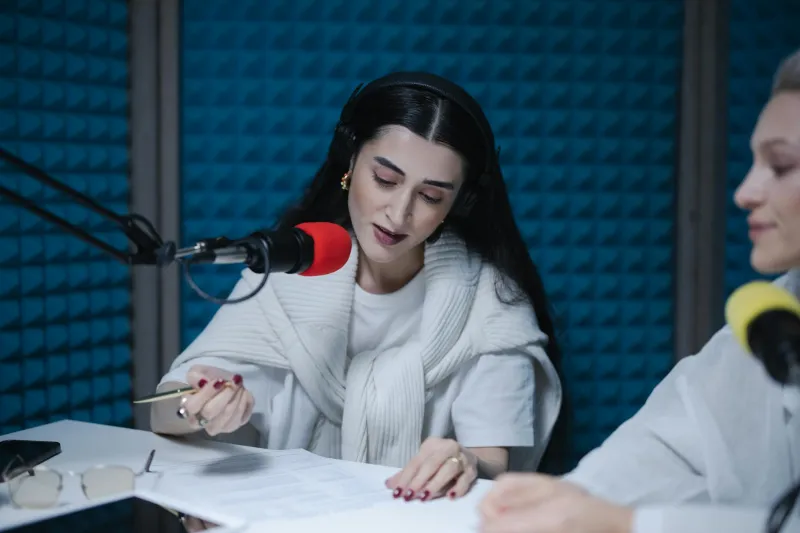
The Voice They Didn't Want
Maria Santos had dreamed of radio since childhood, listening to late-night AM stations crackling across the desert from her family's trailer in Riverside County, California. At nineteen, she saved enough money from her job at a local diner to enroll in the California Broadcasting Academy in Los Angeles.
 Photo: Maria Santos, via okdiario.com
She lasted exactly three weeks.
"Your voice is too rough around the edges," her instructor told her during a particularly brutal critique session. "Radio listeners want smooth, polished delivery. You sound like you've been smoking cigarettes in a gravel pit."
Maria's voice carried the weight of her upbringing—the daughter of farmworkers who'd spent summers working alongside her parents in dusty fields. Her English was perfect, but it bore the unmistakable marks of her community: direct, unvarnished, real.
The broadcasting school suggested she consider a different career path.
Finding Her Frequency
Rather than abandon her dream, Maria scraped together $3,000 and applied for a low-power FM license to serve the unincorporated community of Desert Vista—population 847. The Federal Communications Commission approved her application in 1994, largely because no commercial broadcaster wanted to serve such a small, remote area.
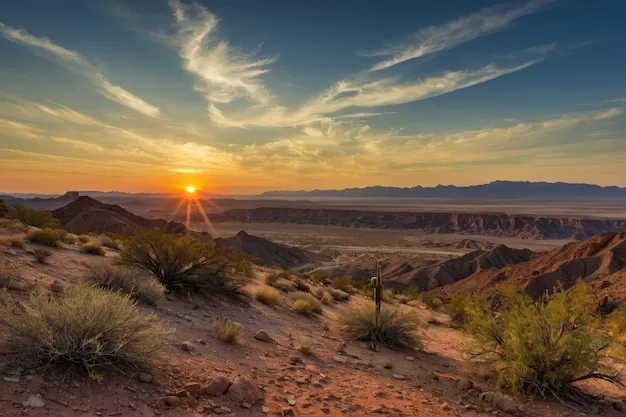 Photo: Desert Vista, via img.freepik.com
KJXR 96.7 FM broadcast from a converted storage shed behind Maria's rented house. Her equipment was secondhand, her programming budget was zero, and her listening area barely extended fifteen miles in any direction.
But Maria had something the polished radio professionals lacked: she knew exactly who she was talking to. Her neighbors. Her community. People who worked with their hands and worried about making rent.
"Good morning, Desert Vista. It's Maria, and it's going to be another scorcher today. Mrs. Rodriguez asked me to remind everyone that the community center has cold water available for anyone working outside. And Tommy Chen is still looking for his lost goat—answers to Princess."
The Community Connection
While commercial radio stations played the same rotation of hits and national news, KJXR became something different. Maria read local obituaries, announced community meetings, and helped neighbors find lost pets. She played a mix of classic rock, Mexican ballads, and whatever CDs people dropped off at the station.
Her "rough" voice, the one broadcasting school had rejected, became the sound of home for Desert Vista residents. Truck drivers tuned in during long hauls. Farmworkers listened on transistor radios in the fields. Elderly residents kept the station on all day for company.
Maria's programming wasn't sophisticated, but it was essential. In a community where many residents couldn't afford cable television or reliable internet, KJXR was often their primary source of information.
When Everything Went Wrong
October 12, 2003, started like any other day. Maria was playing requests and reading community announcements when she noticed something troubling in the distance: a thin column of smoke rising from the mountains east of town.
By noon, the smoke had thickened. By 2 PM, the Riverside County Fire Department was scrambling resources. By 4 PM, the official emergency alert system had failed—overloaded by the massive Cedar Fire burning simultaneously in San Diego County.
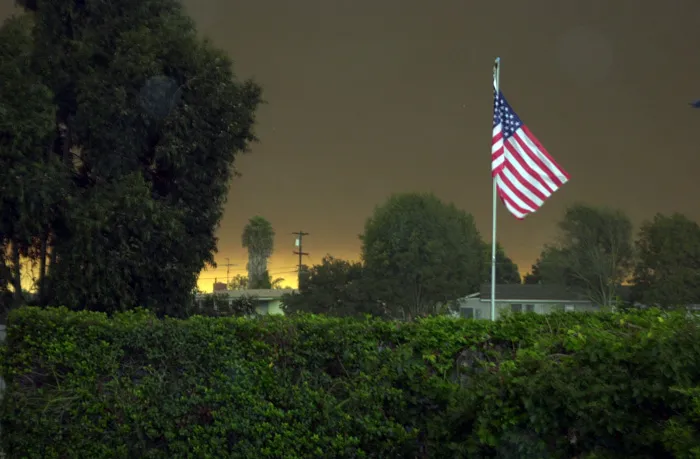 Photo: Cedar Fire, via orgasmicdevices.com
Maria stayed on the air as winds pushed the fire directly toward Desert Vista. When cell phone towers went down and power lines started failing, KJXR became the community's lifeline.
"Listen to me, Desert Vista," Maria's voice cut through the static. "The fire is moving fast. If you're in the eastern neighborhoods—Cactus Lane, Desert Rose, anywhere near the wash—you need to leave now. Don't pack. Don't think about it. Get in your car and drive west toward the highway."
The Voice of Crisis
For eighteen hours, Maria broadcast continuously as the fire engulfed over 30,000 acres around Desert Vista. She relayed evacuation orders, coordinated rescue efforts, and provided real-time updates on which roads remained passable.
When the fire department's radio system became overwhelmed, they began using KJXR as an unofficial communication hub. Fire crews would call the station to report their locations and needs, and Maria would relay the information to other units.
"Engine 47, Maria here. Captain Rodriguez says the road to the elementary school is still clear if you need to refuel. And Mrs. Patterson is asking if anyone has seen her husband—he was supposed to evacuate with the neighbors on Sunset Drive."
Maria's voice—that same "rough" voice broadcasting school had rejected—became a beacon of calm in the chaos. She didn't have the polished delivery of network news anchors, but she had something more valuable: credibility born from years of genuine connection with her community.
The Numbers That Mattered
When the fire was finally contained three days later, the statistics told a remarkable story. Despite destroying over 200 homes in the surrounding area, Desert Vista lost only twelve structures. More importantly, not a single resident died.
Fire officials credited KJXR's continuous broadcasts with preventing a catastrophe. Maria's real-time updates had helped residents evacuate safely and allowed emergency crews to coordinate more effectively than they could through official channels.
"She knew every street, every family, every potential problem," said Fire Captain David Morrison. "When she said the Hendersons' truck was broken down on Mesquite Road, we knew exactly where to send help. Her local knowledge saved lives."
After the Fire
Maria's heroic broadcasts during the fire brought national attention to KJXR. She received offers from major radio networks, invitations to speak at broadcasting conferences, and inquiries from documentary filmmakers.
She turned them all down.
"This is where I belong," she said simply. "My community needs me here."
Maria continued broadcasting from her converted shed until 2018, when she finally upgraded to a proper studio—funded by donations from grateful listeners. She never changed her approach: local news, community announcements, and whatever music people wanted to hear.
The California Broadcasting Academy, the school that had rejected her voice as too rough, invited her to speak to current students in 2010. Her message was simple: "Don't let anyone tell you your voice doesn't matter. Sometimes the most important thing you can do is sound exactly like who you are."
The Real Frequency
Maria Santos proved that authentic communication matters more than perfect delivery. When crisis struck, her community didn't need a polished professional—they needed someone who understood them, someone they trusted, someone who cared more about their safety than her own career.
Her "rough" voice, shaped by years of honest work and genuine connection, became exactly what her neighbors needed when it mattered most. In the end, the radio professionals were wrong about what makes a great broadcaster. Sometimes the most powerful voice is simply the most real one.