Too Small to Win: Five Athletes Who Proved Size Is Just a Number

When Physical 'Flaws' Became Superpowers
American sports culture worships size, speed, and strength. But some of the most unbreakable records in athletic history belong to athletes who possessed none of these qualities—at least not according to their coaches.
These five competitors were dismissed for physical limitations that should have ended their careers before they started. Instead, they transformed their supposed weaknesses into competitive advantages that redefined what it means to be elite.
1. Muggsy Bogues: The Point Guard Who Saw Over Everyone
The Rejection: At 5'3", Tyrone "Muggsy" Bogues was cut from his high school basketball team as a freshman. Coaches said he was simply too small to compete against players who towered over him.
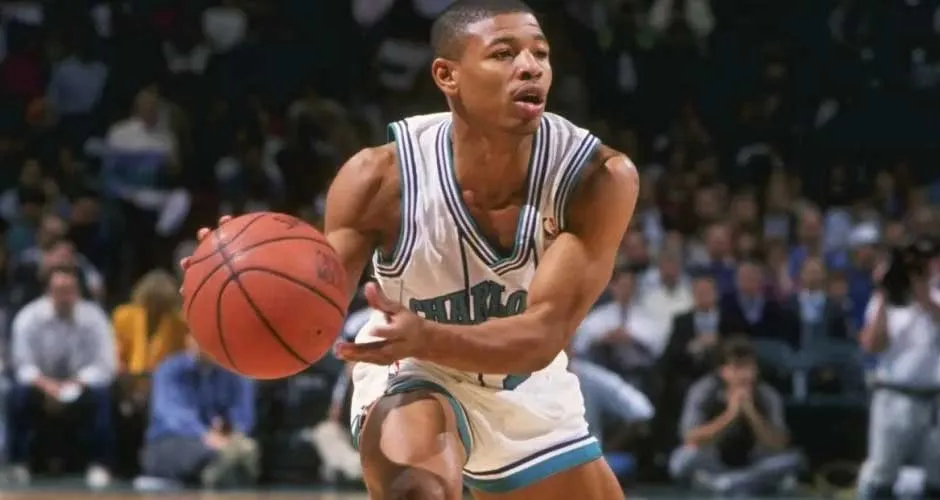 Photo: Muggsy Bogues, via www.goodluckinfo.com
The Response: Bogues didn't grow taller—he got smarter. While other players relied on height advantages, he developed court vision that bordered on supernatural. He could anticipate plays three passes ahead and thread impossible passes through forests of legs and arms.
During his 14-year NBA career, Bogues recorded 6,726 assists—a remarkable number for any player, but extraordinary for someone who couldn't see over most opponents' shoulders. His secret wasn't seeing around bigger players; it was seeing the game differently.
The Record That Stands: Bogues holds the record for the shortest player to record a triple-double in NBA history, and his assist-to-turnover ratio of 4.69 remains among the best for point guards his era. More importantly, he proved that basketball IQ could overcome any physical disadvantage.
The Innovation: Bogues pioneered what coaches now call "floor vision"—reading the game through movement patterns rather than visual sightlines. Modern point guards study his techniques for playing effectively in traffic.
2. Flozell Adams: The 'Slow' Lineman Who Never Missed a Block
The Rejection: NFL scouts clocked Flozell Adams running a 5.8-second 40-yard dash—glacially slow for an offensive lineman. Multiple teams passed on him, saying he lacked the foot speed to protect modern quarterbacks.
The Response: Adams couldn't outrun pass rushers, so he learned to outthink them. He studied film obsessively, memorizing every defensive player's tendencies, favorite moves, and timing patterns. By the time the ball was snapped, Adams already knew where his opponent was going.
His technique was unorthodox—instead of trying to overpower or outmaneuver rushers, he positioned himself perfectly to disrupt their planned routes. He turned pass protection into a chess match where he was always three moves ahead.
The Record That Stands: Adams allowed only 23 quarterback sacks in 12 NFL seasons—the lowest rate among starting tackles of his generation. His 2007 season saw him protect Tony Romo for 16 games while allowing zero sacks, a feat unmatched by supposedly superior athletes.
The Innovation: Adams developed "anticipatory blocking"—a technique now taught to linemen who lack elite athleticism. His approach proved that perfect positioning beats raw speed every time.
3. Pat Burrell: The 'Weak' Hitter Who Redefined Power
The Rejection: College scouts dismissed Pat Burrell as too slow and lacking the bat speed for competitive baseball. His swing was called "long and loopy"—the kind that faster pitching would easily expose.
The Response: Burrell couldn't swing faster, so he learned to swing smarter. He developed an almost mathematical approach to hitting, studying pitcher tendencies and strike zone patterns with scientific precision. His "slow" swing became incredibly efficient, making contact at the optimal moment for maximum power.
While other players tried to muscle the ball, Burrell used leverage and timing. His home runs weren't the result of raw strength—they came from perfect mechanics that generated maximum force from minimal effort.
The Record That Stands: Burrell's 292 career home runs included a stretch where he homered in seven consecutive games, tying a National League record. His 2002 season featured 37 home runs with a swing that radar guns measured as among the slowest in baseball.
The Innovation: Burrell pioneered "efficiency hitting"—generating maximum power through optimal swing mechanics rather than raw bat speed. Modern hitting coaches study his techniques for working with players who lack natural quickness.
4. Shannon Miller: The 'Too Small' Gymnast Who Dominated Giants
The Rejection: At 4'9" and 79 pounds, Shannon Miller was considered too small and weak for elite gymnastics. Coaches worried she lacked the power for dynamic tumbling and the reach for apparatus work.
 Photo: Shannon Miller, via people.com
The Response: Miller transformed her compact size into a competitive weapon. Her low center of gravity provided unprecedented stability on beam routines, while her lighter weight allowed for rotation speeds that taller gymnasts couldn't match.
She developed techniques specifically designed for smaller athletes—using momentum and precision rather than raw power. Her routines were mathematically perfect, with every movement calculated for maximum efficiency.
The Record That Stands: Miller won seven Olympic medals (two gold) and nine World Championship medals—the most successful American gymnast in history at the time. Her consistency rate of 95% in major competitions remains unmatched.
The Innovation: Miller proved that gymnastics success came from technical perfection rather than physical dominance. Her training methods revolutionized how coaches work with smaller athletes.
5. Doug Flutie: The 'Too Short' Quarterback Who Saw Everything
The Rejection: At 5'10", Doug Flutie was told he was too short to play quarterback at any competitive level. College recruiters said he couldn't see over offensive lines, and NFL scouts dismissed him as a career backup.
 Photo: Doug Flutie, via api.time.com
The Response: Flutie couldn't see over linemen, so he learned to see around them. He developed pocket movement that kept him in throwing lanes while maintaining perfect field vision. His mobility wasn't about running—it was about creating sightlines.
His arm strength was considered average, but his accuracy was supernatural. Flutie completed passes that required threading footballs through impossible spaces, using touch and timing that taller quarterbacks with stronger arms couldn't replicate.
The Record That Stands: Flutie's 41,355 passing yards across professional football leagues included a completion percentage of 54.7% on passes thrown into coverage—significantly higher than most quarterbacks throwing to open receivers.
The Innovation: Flutie pioneered "pocket navigation"—maintaining passing effectiveness despite height disadvantages through superior movement and field reading. His techniques are now standard coaching curriculum.
The Real Advantage
These athletes share a common thread: they succeeded not despite their physical limitations, but because of them. Being forced to develop alternative approaches made them more complete competitors than athletes who relied solely on natural gifts.
While their physically gifted peers often plateaued when raw talent was no longer sufficient, these "disadvantaged" athletes continued improving through innovation and intelligence. They proved that the most dangerous competitor isn't the biggest or fastest—it's the one who refuses to accept that bigger and faster automatically means better.
In American sports, where physical superiority is often treated as destiny, these five athletes rewrote the rules about what makes a champion. Their records stand not as flukes, but as proof that the right approach can overcome any supposed limitation.