The Brilliant Misfits: When School Said 'No' But Stockholm Said 'Yes'

When Brilliance Doesn't Fit the Mold
Every October, the world watches as the Nobel Committee announces the year's most groundbreaking scientific achievements. The winners stride across Stockholm's stage, representing the pinnacle of human intellectual accomplishment. But what if we told you that many of these scientific giants were once written off as academic failures?
Six Nobel laureates share an unlikely common experience: they were formally dismissed, rejected, or labeled as intellectually inadequate by the very educational systems designed to identify and nurture scientific talent. Their stories reveal a troubling pattern in how we recognize and develop brilliance—and offer hope to anyone who's ever been told they're not smart enough.
Albert Einstein: The 'Mentally Slow' Revolutionary
Perhaps no story better illustrates the spectacular failure of academic judgment than Albert Einstein's early years. Contrary to popular myth, Einstein wasn't a poor student—he was a student that teachers simply couldn't understand.
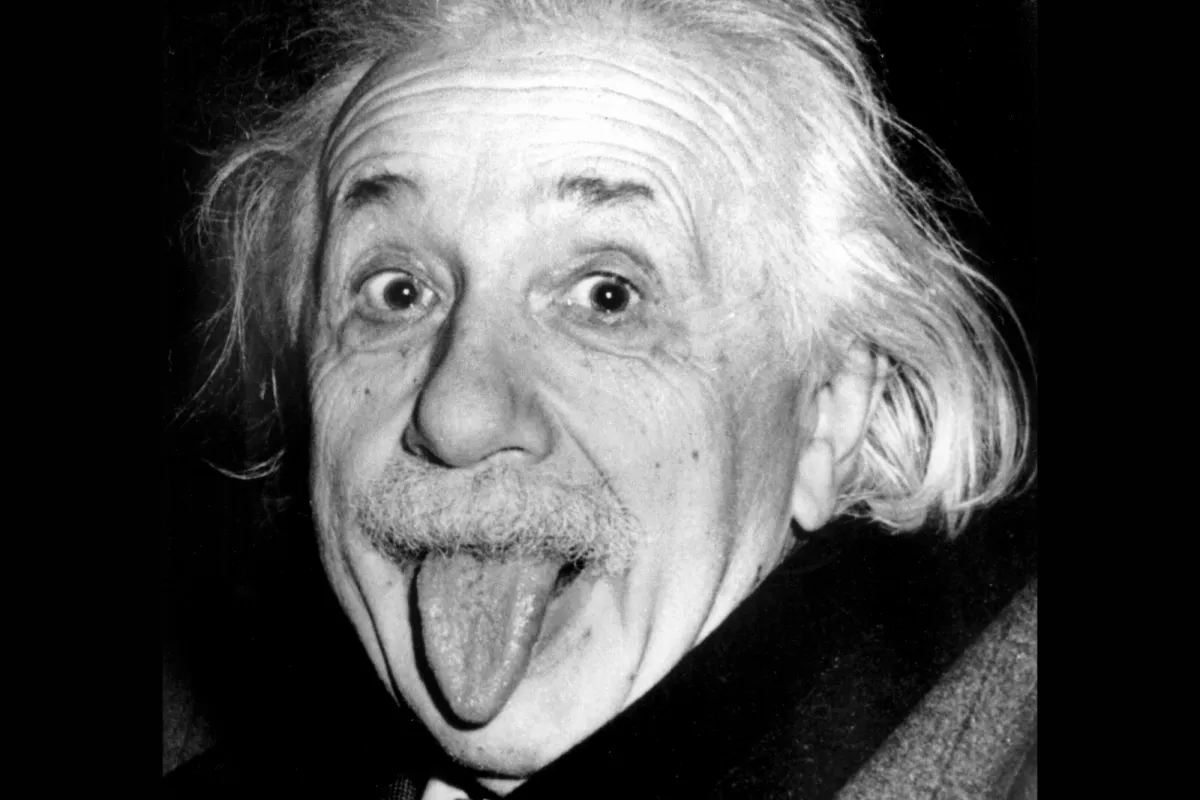 Photo: Albert Einstein, via nypost.com
At Munich's Luitpold Gymnasium, Einstein's teachers regularly complained about his "insolent" questions and his refusal to accept explanations that didn't make logical sense to him. One instructor famously told him he would "never amount to anything" and suggested he leave school entirely.
The problem wasn't Einstein's intelligence—it was his approach to learning. While his classmates memorized formulas and accepted established principles without question, Einstein insisted on understanding the fundamental reasoning behind every concept. Teachers interpreted this curiosity as defiance and his thoughtful pauses as mental sluggishness.
When Einstein later developed theories that revolutionized physics, those same questioning habits that frustrated his teachers became his greatest scientific assets. His Nobel Prize in 1921 vindicated a mind that school systems had failed to recognize.
Baruj Benacerraf: Rejected and Redirected to Glory
Baruj Benacerraf dreamed of becoming a doctor, but American medical schools had other plans. Despite graduating from Columbia University, he faced rejection after rejection from medical programs throughout the United States. The reason? Quotas that limited Jewish students, combined with academic committees that failed to see past his unconventional background as a Venezuelan immigrant.
Forced to pursue medical training in Paris, Benacerraf initially felt devastated by the rejections. But this detour proved transformative. European medical education in the 1940s emphasized research and theoretical understanding in ways American programs didn't. Benacerraf discovered a passion for immunology that might never have emerged in a traditional American medical curriculum.
Returning to the United States as a researcher rather than a clinician, Benacerraf pioneered groundbreaking work on immune system genetics. His discoveries about how the body recognizes foreign substances earned him the 1980 Nobel Prize in Physiology or Medicine—an achievement that began with rejection from the very institutions that should have recognized his potential.
Rita Levi-Montalcini: The 'Unsuitable' Student Who Rewrote Neuroscience
In 1930s Italy, Rita Levi-Montalcini faced double discrimination: as a woman in science and as a Jewish student during the rise of fascism. Her medical school professors regularly questioned whether she possessed the "masculine rationality" necessary for scientific research.
 Photo: Rita Levi-Montalcini, via m.media-amazon.com
One anatomy professor bluntly told her that women lacked the intellectual rigor for serious medical study and suggested she pursue nursing instead. When racial laws later barred her from university positions, it seemed her scientific career was over before it began.
Instead, Levi-Montalcini built a secret laboratory in her bedroom, using makeshift equipment to study nerve development in chicken embryos. Working in hiding during World War II, she made observations about nerve growth that would later revolutionize neuroscience.
Her bedroom experiments led to the discovery of nerve growth factor, a breakthrough that explained how the nervous system develops and repairs itself. The 1986 Nobel Prize in Physiology or Medicine validated decades of work that began when academic institutions declared her unsuitable for science.
John Gurdon: From 'Hopeless' to Historic
At Eton College, biology teacher Michael Rosen delivered a devastating assessment of student John Gurdon: "His work has been far from satisfactory. He has no aptitude for biology and would be wasting his time and that of those who teach him if he attempted to specialize in this subject."
The report, which Gurdon kept on his desk throughout his career, ranked him dead last in his biology class. Teachers suggested he focus on classical languages instead, viewing science as clearly beyond his capabilities.
Gurdon's crime? Asking questions that seemed to challenge established biological principles. When textbooks stated that cell development was irreversible, Gurdon wondered if that was actually true. His teachers interpreted these inquiries as evidence that he didn't understand basic concepts.
Decades later, Gurdon's "hopeless" curiosity led him to prove that cell development could indeed be reversed. His pioneering work in nuclear transfer and cellular reprogramming earned him the 2012 Nobel Prize in Physiology or Medicine, laying the groundwork for modern stem cell research.
Elizabeth Blackburn: The 'Unfocused' Future Laureate
Growing up in Tasmania, Elizabeth Blackburn showed intense curiosity about the natural world, but her scattered interests worried teachers and guidance counselors. Academic advisors repeatedly told her she needed to "focus" and pick a single area of study rather than pursuing her broad fascination with biology, chemistry, and mathematics.
Her high school science teacher wrote in a college recommendation: "Elizabeth asks too many questions and seems unable to accept straightforward answers. She may lack the discipline necessary for serious scientific study."
What educators saw as lack of focus, Blackburn experienced as genuine excitement about understanding how different scientific fields connected. This interdisciplinary thinking, discouraged in school, became her greatest research strength.
Blackburn's ability to draw connections across traditional scientific boundaries led her to discover telomerase, an enzyme that protects chromosomes and plays a crucial role in aging and cancer. Her 2009 Nobel Prize in Physiology or Medicine resulted from exactly the kind of broad, questioning approach that teachers had once criticized.
Sydney Brenner: The 'Disruptive' Student Who Disrupted Science
Sydney Brenner's teachers in South Africa regularly sent him to the principal's office for "disruptive behavior" in science classes. His offense? Designing alternative experiments to test the same principles his textbooks described, often producing results that contradicted established explanations.
One chemistry teacher wrote to his parents: "Sydney seems incapable of following established procedures and insists on inventing his own methods. This behavior suggests he may not be suited for scientific study."
Brenner's "disruptive" tendency to question established methods and design new experimental approaches became the foundation of his revolutionary research style. He pioneered the use of genetic techniques to study development and behavior, work that earned him the 2002 Nobel Prize in Physiology or Medicine.
The Pattern Behind the Prizes
These six stories reveal a troubling consistency: educational systems that mistake intellectual curiosity for academic deficiency, unconventional thinking for inability, and deep questioning for lack of understanding.
Each future laureate possessed exactly the qualities that produce revolutionary science—willingness to challenge assumptions, ability to see connections others missed, and persistence in pursuing answers that textbooks couldn't provide. Yet these same qualities made them appear unsuitable for scientific careers to the educators tasked with identifying scientific talent.
Their eventual Nobel Prizes represent more than individual triumphs; they're indictments of educational systems that consistently fail to recognize the very thinking patterns that drive scientific breakthroughs.
Perhaps most importantly, these stories offer hope to anyone who's been told they're not smart enough, focused enough, or conventional enough for success. Sometimes the qualities that make you seem like a poor student are exactly what the world needs most.