Forty and Fearless: The Athletes Who Were Supposed to Be Done — and Then Became Legends
The Myth of the Expiration Date
American sports culture loves youth. It loves the twenty-two-year-old phenom, the rookie sensation, the athlete who seems to have arrived fully formed from some athletic factory. What it doesn't love — what it often actively resists — is the idea that a forty-year-old might be better than they were at thirty. Or that the body, given the right care and the right mindset, doesn't follow the decline curve we've all been told to expect.
The five athletes below didn't just defy that narrative. They dismantled it, piece by piece, with performances that left younger competitors staring at their backs.
1. George Foreman — The Heavyweight Who Came Back From the Dead
When George Foreman retired from boxing in 1977, he was twenty-eight years old and had just suffered a string of defeats that seemed to confirm his best days were gone. He became an ordained minister. He ran a youth center in Houston. He gained weight. He was, by every reasonable measure, finished.
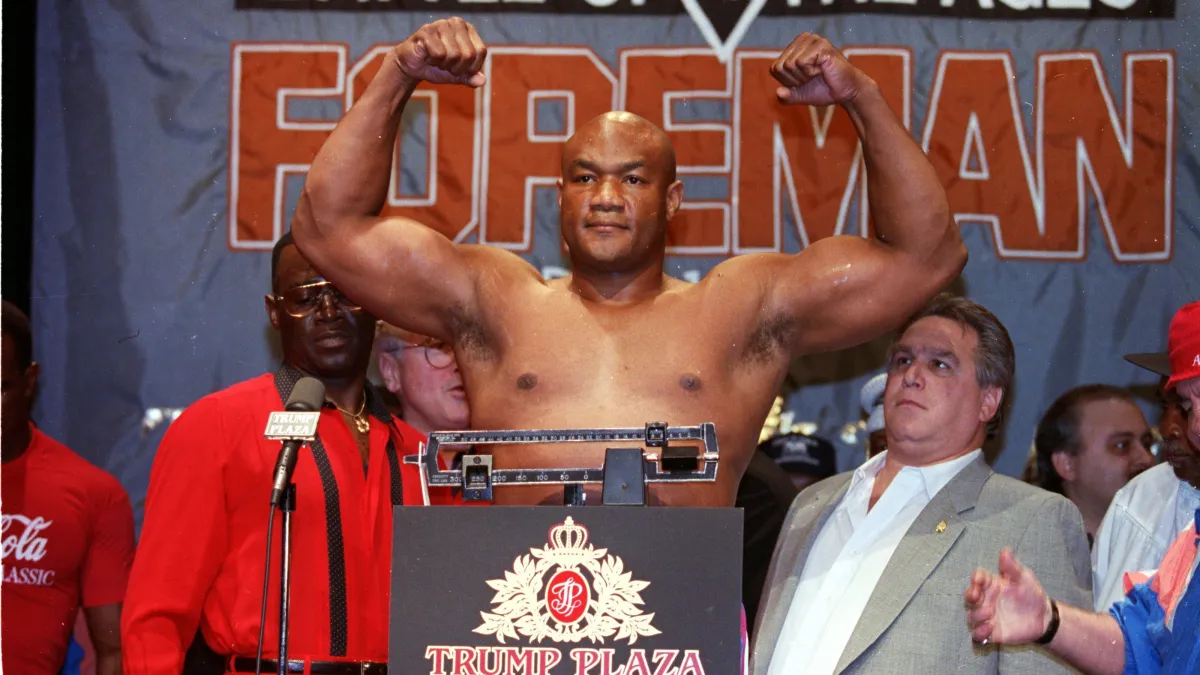 Photo: George Foreman, via album.mediaset.es
Then, at age thirty-eight, he came back.
The boxing world treated his return as a curiosity at best, a punchline at worst. Foreman was slow, they said. He was fat. He was a novelty act. He kept winning anyway, grinding down opponents with a patient, methodical style that bore almost no resemblance to the explosive, terrifying fighter he'd been in his twenties.
On November 5, 1994, George Foreman — forty-five years old, twenty years removed from his first heavyweight championship — knocked out Michael Moorer to become the oldest heavyweight champion in boxing history. The knockout punch was a right hand so clean and sudden it seemed almost casual. Moorer, twenty-six years old and undefeated, didn't see it coming.
Foreman had spent his second career studying what his body could still do rather than mourning what it couldn't. He hit less often and harder. He conserved energy with a discipline that younger fighters rarely need to develop. He won not despite his age but, in a very real sense, because of what age had taught him.
2. Dara Torres — The Olympic Swimmer Who Refused to Believe the Clock
Dara Torres first swam in the Olympics in 1984, when she was seventeen. By the time she showed up at the 2008 Beijing Games, she was forty-one years old and the mother of a two-year-old daughter. She had retired twice. She had rebuilt her body from scratch. She had done it with a training regimen so unconventional — emphasizing recovery, flexibility, and individualized stretching over raw volume — that it became the subject of serious scientific interest.
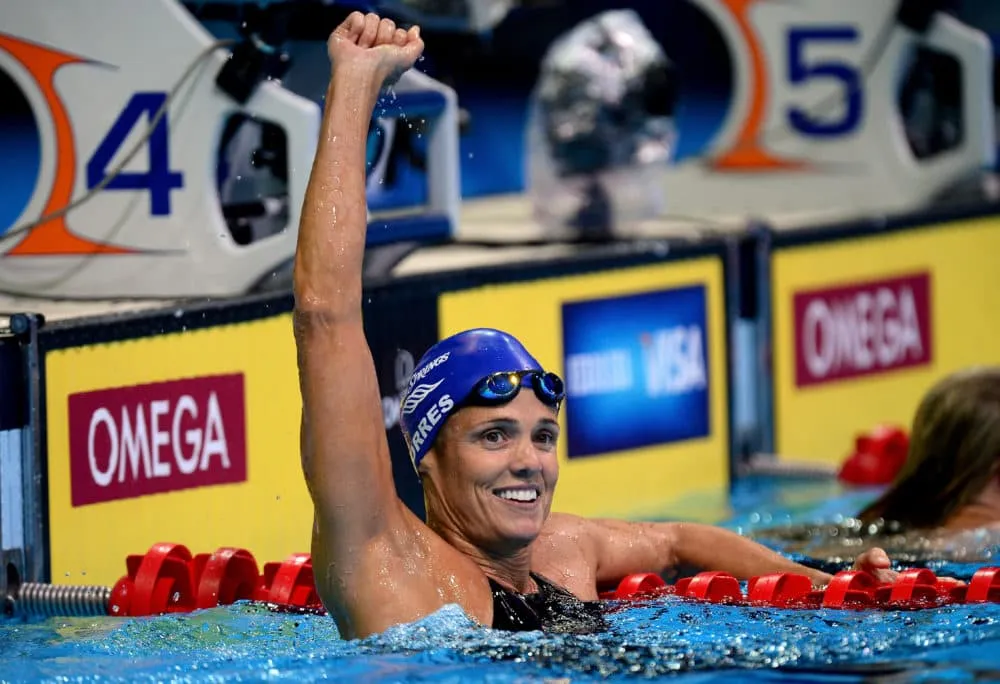 Photo: Dara Torres, via wordpress.wbur.org
In Beijing, Torres swam the 50-meter freestyle in 24.07 seconds — a time that would have won gold at three of the four previous Olympic Games. She missed gold by one hundredth of a second. One hundredth. She won three silver medals that week.
What made Torres's story particularly instructive was her willingness to throw out the rulebook. Traditional swim training is built around volume — miles and miles in the pool. Torres worked with a team that prioritized what her specific body needed at forty-one, not what a twenty-year-old's training manual recommended. She trained smarter, not just harder, and she got faster than she'd been in her twenties.
3. Gordie Howe — The Man Who Played Professional Hockey at Fifty-Two
Gordie Howe is already one of the most decorated players in hockey history. He played in the NHL for thirty-two seasons across five decades. He scored 801 goals. He was so dominant for so long that players routinely described him as the greatest who ever lived.
But the most remarkable chapter of his career came after what everyone assumed was his final retirement.
In 1973, at age forty-five, Howe came out of retirement to play for the Houston Aeros in the World Hockey Association — partly to play alongside his two sons, Mark and Marty. He was named the WHA's most valuable player that season. He played until 1980, when he was fifty-one years old, appearing in one final NHL game for the Hartford Whalers at fifty-two, becoming the only player in history to play professional hockey in five different decades.
Howe's secret, if you could call it that, was a body that had been built through a lifetime of physical work and a competitive ferocity that simply never cooled. He was also, by all accounts, one of the most physically imposing players in the locker room well into his forties — not through any particular wellness regimen, but through genetics and a refusal to let anyone in the building forget who he was.
4. Tom Brady — The Sixth-Round Pick Who Kept Playing Until He Didn't Want To Anymore
Tom Brady was drafted 199th overall in the 2000 NFL Draft. Six quarterbacks were taken before him. He was considered a developmental prospect at best, a career backup at worst. What happened next is the most decorated career in NFL history.
But Brady's most underappreciated chapter isn't the early Super Bowls. It's what he did at forty-three.
In the 2020 season, his first with the Tampa Bay Buccaneers after leaving New England, Brady led a team that had missed the playoffs the previous year to a Super Bowl championship. He threw for 4,633 yards, 40 touchdowns, and 12 interceptions during the regular season. In the Super Bowl, he dissected the Kansas City Chiefs with the calm efficiency of a man who had simply seen everything before.
Brady's approach to longevity is now almost as famous as his playing career — the strict diet, the pliability-focused training, the obsessive sleep routine. He built a philosophy around treating his body as a system to be maintained rather than a resource to be burned through. Whether you find his wellness brand compelling or exhausting, the results were undeniable. He retired in February 2023 at forty-five, still capable of playing at an elite level.
5. Merlene Ottey — The Sprint Queen Who Competed at Forty-Seven
Merlene Ottey is one of the most decorated track and field athletes in history — a Jamaican sprinter whose career stretched so far that she competed at seven consecutive Olympic Games between 1980 and 2004. But her story after forty is the part that tends to leave people speechless.
Ottey became a Slovenian citizen and continued competing at the international level well into her forties. At forty-seven, she was still running 100-meter times that would qualify her for most national championships. She ran competitively until she was past fifty, collecting medals at World Masters Athletics championships with the same focused intensity she'd brought to the Olympic track decades earlier.
What kept Ottey going wasn't stubbornness alone — it was structure. She maintained a full training schedule, worked with coaches, and approached competition with the same professionalism she'd practiced her entire career. Age, for Ottey, was simply a number that other people seemed more bothered by than she was.
The Real Lesson
These five athletes didn't succeed past forty by accident, and they didn't succeed by pretending age wasn't real. They succeeded by refusing to let other people's assumptions about age become their own operating instructions.
The conventional sports narrative says the body peaks in the mid-to-late twenties and declines from there. That's true in some narrow physiological sense. But peak performance isn't purely physiological. It's also strategic, psychological, and deeply personal — shaped by experience, wisdom, and a kind of self-knowledge that only comes with time.
The athletes who last aren't always the ones with the most raw talent. They're the ones who figure out, earlier than most, that the game is longer than anyone tells you it's going to be.