Bankrupt and Back: Six American Companies That Hit Rock Bottom and Then Rewrote Their Industries
When the Bottom Becomes the Foundation
There's a version of American business mythology that treats failure as a pitstop on the road to success — a brief, character-building inconvenience before the inevitable triumph. The reality is messier and, honestly, more interesting.
For the founders and companies on this list, failure wasn't a stumble. It was a full collapse. Creditors. Court filings. The whole humiliating machinery of formal insolvency. And yet, what came out the other side didn't just survive — it changed the shape of entire industries. In several cases, the bankruptcy itself was the forcing function. The thing that stripped away the comfortable assumptions and left only the ideas that actually worked.
These are six of those stories.
1. Henry Ford and the Detroit Automobile Company
Before Ford Motor Company became the company that put America on wheels, Henry Ford failed. Twice.
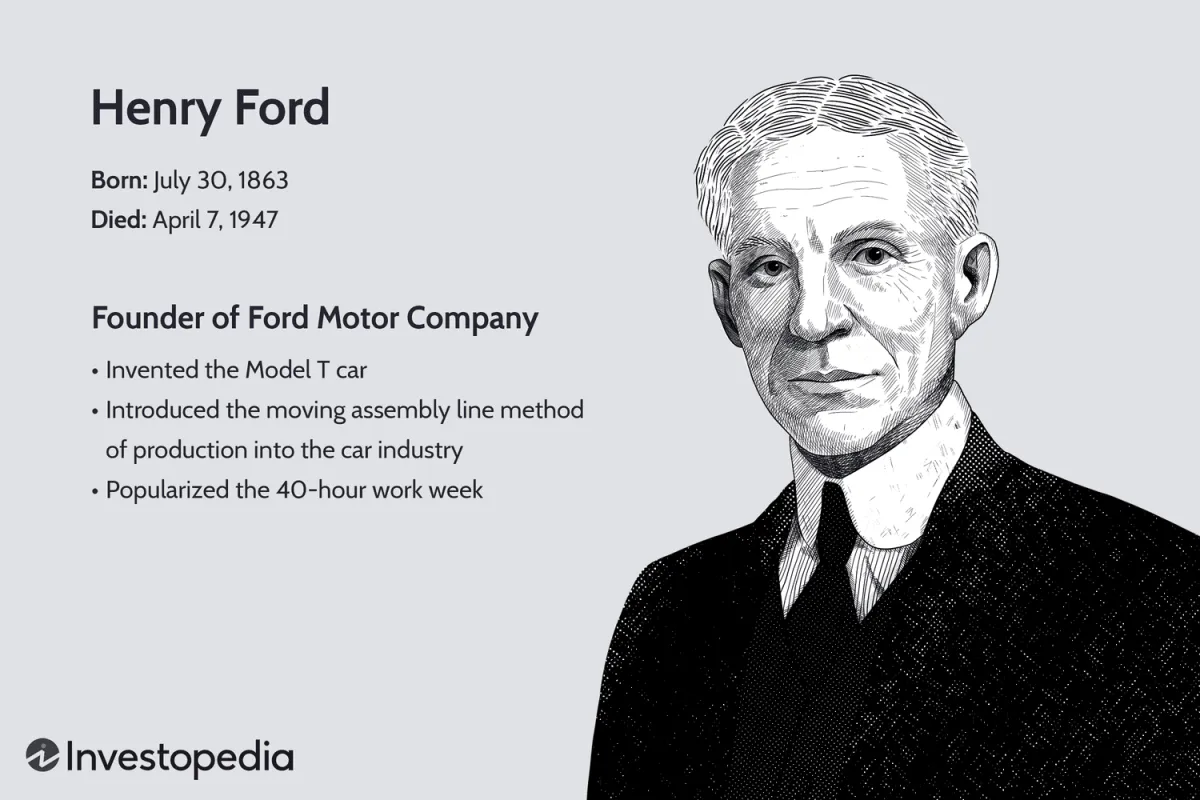 Photo: Henry Ford, via www.investopedia.com
The Detroit Automobile Company, Ford's first venture, folded in 1901 after producing barely a dozen vehicles. Investors lost confidence. Ford lost control. The company dissolved.
His second attempt, the Henry Ford Company, lasted less than a year before he walked away from it under pressure from his own backers.
What changed between those failures and the founding of Ford Motor Company in 1903 wasn't Ford's ambition — that was always there. What changed was his understanding of what the product actually needed to be. The failed companies had been building cars for wealthy buyers, following the prevailing logic of the industry. The bankruptcy forced Ford to reckon with why those ventures hadn't worked. His answer — that the market wasn't wealthy buyers, it was everybody — was the insight that built the assembly line, the Model T, and the modern American middle class.
The boardrooms of his failed companies would never have permitted that conclusion. It took losing everything to think clearly enough to reach it.
2. Milton Hershey and the Lancaster Caramel Company
Before the Hershey bar became America's candy, Milton Hershey was a twice-bankrupt confectioner who couldn't keep a business alive.
His first candy shop in Philadelphia failed after six years. A second attempt in New York collapsed shortly after. By his early thirties, Hershey had burned through his own savings and his family's money, and had nothing to show for it except a reputation for stubbornness.
The Lancaster Caramel Company was his third attempt, and it worked — but it worked because bankruptcy had taught Hershey something the candy industry hadn't yet figured out: process consistency and mass production were more valuable than artisanal quality. His failed ventures had tried to compete on craftsmanship. The business that survived competed on scale and reliability.
When he eventually sold Lancaster Caramel for $1 million in 1900 and turned his attention entirely to chocolate, he was applying lessons that only two bankruptcies could have taught him. The result was a product, a manufacturing model, and a company town in Pennsylvania that defined American confectionery for a century.
3. Walt Disney and Laugh-O-Gram Studios
Walt Disney's first animation company, Laugh-O-Gram Studios in Kansas City, went bankrupt in 1923. Disney was twenty-one years old. He had signed more contracts than he could fulfill, misjudged his costs, and run out of money before he could finish the project that was supposed to save the company.
 Photo: Walt Disney, via read.nxtbook.com
He arrived in Hollywood with forty dollars and a cardboard suitcase.
The specific failure of Laugh-O-Gram taught Disney something that shaped everything he built afterward: creative ambition without financial architecture is just expensive daydreaming. The studio he built in California was structured from the ground up around the hard lessons of that Kansas City collapse — careful cost management, controlled distribution deals, and a refusal to let the creative side of the business operate without accountability to the financial side.
Without the bankruptcy, there's no particular reason to think Disney would have developed the business discipline that made his later ventures not just artistically successful but commercially dominant. The studio, the theme parks, the media empire — all of it traces back, in some structural sense, to a twenty-one-year-old learning what failure actually costs.
4. H.J. Heinz and His First Horseradish Company
Henry John Heinz launched his first food business in 1869, bottling and selling horseradish in clear glass jars — the clear glass being a deliberate marketing decision to show customers the product had no adulterants. The business grew. Then it overextended, took on too much inventory during a financial panic year, and went formally bankrupt in 1875.
Heinz was personally devastated. His family had invested. His reputation in Pittsburgh's business community was damaged. By conventional wisdom, he was finished.
He started over the following year with a new company, a new partner, and one product: tomato ketchup.
The bankruptcy had clarified his thinking in a specific way. His first company had tried to sell too many things to too many buyers. The failure taught him to find the single product with the widest possible market and build everything around it. The ketchup formula, the iconic bottle, the "57 Varieties" branding — all of it emerged from a company built on the wreckage of a broader, less focused ambition.
Heinz went on to build one of the most recognized food brands in American history. The ketchup bottle alone is a design icon. None of it happens without the horseradish company going under.
5. Charles Goodyear and the Rubber Experiments
Charles Goodyear's path to vulcanized rubber — the discovery that made the modern tire industry possible — ran directly through bankruptcy court. Multiple times.
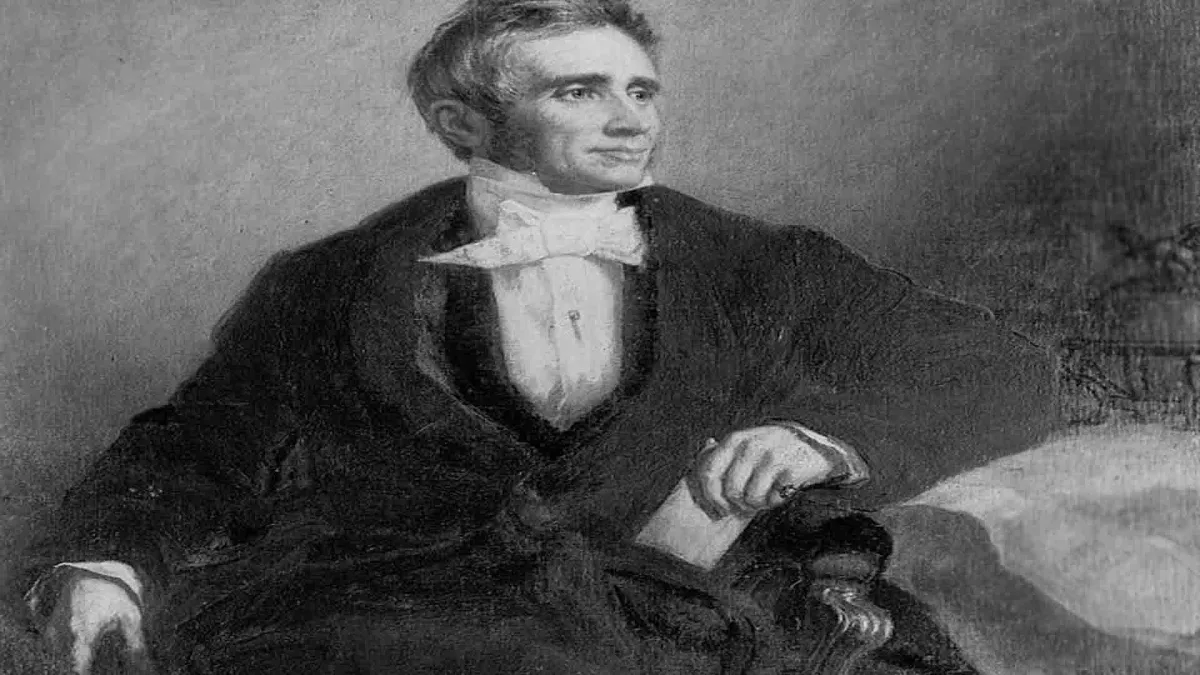 Photo: Charles Goodyear, via www.vedantu.com
Goodyear spent the 1830s obsessively experimenting with natural rubber, convinced there was a way to stabilize it against temperature extremes. He was right, but he was also chronically broke, repeatedly imprisoned for debt, and watched by most of the business community as a cautionary tale about obsessive thinking.
His family went without heat. His children went without adequate food. His creditors went without payment. He pawned his children's schoolbooks.
What kept him going — and what eventually produced the sulfur-and-heat process that transformed rubber from a novelty into an industrial material — was precisely the absence of any comfortable alternative. He had no investors left to satisfy, no reputation left to protect, no comfortable exit available. The bankruptcy had closed every door except the one that led back to the laboratory.
The tire industry, the medical equipment industry, the industrial gasket and seal industry — the economic architecture of modern manufacturing runs on Goodyear's discovery. And his discovery runs on a decade of having absolutely nothing left to lose.
6. Macy's Early Financial Collapses
Rowland Hussey Macy opened four retail stores before he turned thirty-six. All four failed. The pattern was consistent enough that a reasonable person would have concluded retail simply wasn't his calling.
His fifth store, opened in New York City in 1858, became Macy's.
What the four failures had given Macy was an unusually precise understanding of what didn't work in American retail — overreliance on credit sales, poor location selection, insufficient attention to the customer experience inside the store. Each bankruptcy had been a masterclass in a specific mistake.
The New York store applied all of those lessons simultaneously. Fixed prices instead of negotiated ones. A cash-only policy that eliminated credit risk. A location calculated to intercept foot traffic rather than wait for it. And a theatrical approach to window displays and store design that treated shopping as an experience rather than a transaction.
Those innovations didn't come from business school theory. They came from four bankruptcies worth of empirical education.
Macy's went on to define American department store retail for more than a century. The Thanksgiving Day Parade alone has become a piece of national cultural infrastructure. All of it built on the wreckage of four stores that couldn't stay open.
The Pattern Underneath the Stories
None of these people were reckless. None of them failed because they were careless or unserious. They failed because they were trying something genuinely hard in conditions that didn't guarantee success.
What the bankruptcy forced — in every single case — was a confrontation with the specific, unromantic truth of why the previous approach hadn't worked. Comfortable companies can avoid that confrontation for years. A bankruptcy court doesn't allow it.
The collapse, it turns out, was the education. The industry-defining company was the graduation.