Broke, Rejected, and Recording in a Barn: The Outsider Who Accidentally Built the Sound of Nashville
In the early 1950s, if you wanted to make it in country music, you went to Nashville. You dressed right, you played the game, and you made sure your sound didn't stray too far from what the gatekeepers already knew how to sell. The formula was tight. The doors were tighter.
Hank Mizell wasn't the kind of man those doors opened for.
He was broke in the specific, grinding way that doesn't leave much room for strategy. He'd come up from rural Georgia with a guitar he'd half-repaired himself and a catalog of original songs that didn't quite fit any category the industry recognized. Too raw for the polished Nashville sound. Too melodic for the honky-tonk crowd. Too something, always, for whoever was doing the rejecting that week.
What happened next wasn't a plan. It was desperation dressed up as creativity — and it quietly changed everything.
The Rooms Nobody Wanted
When you can't afford studio time, you record where you can. Mizell learned this the hard way after burning through what little money he had on two sessions at a small Nashville studio that produced recordings he couldn't sell and couldn't afford to repeat. He moved back toward the rural South — not because he gave up, but because he ran out of options.
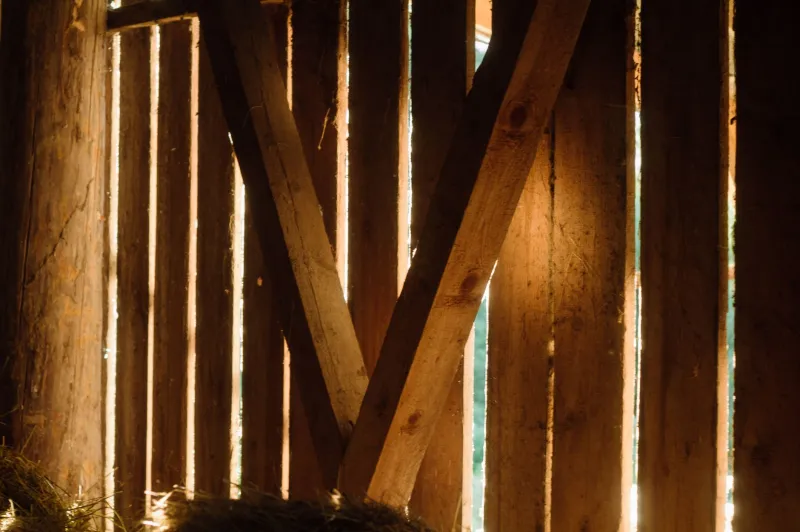
What he found there was a different kind of acoustic environment. Church halls with natural reverb that no engineered studio had quite managed to replicate. Barns with wooden walls that absorbed sound in ways that softened the sharp edges of his playing. A friend's hardware store after closing time, where the concrete floors and metal shelving created an echo that gave his vocals a depth he'd never heard in his own voice before.
He wasn't chasing a sound. He was chasing a free room. But the rooms were shaping the music in ways he couldn't have engineered on purpose.
He also started mixing. Not in the formal sense — he had no mixing board — but in the sense of combining what he knew with what was around him. He'd grown up hearing gospel music, old Appalachian string traditions, and the early R&B drifting up from the radio stations in Atlanta. None of those influences were welcome in the Nashville of the early 1950s. He used them anyway, partly out of stubbornness and partly because he simply didn't know enough about the rules to be intimidated by them.
The Sounds That Purists Hated
The recordings Mizell made during this period — distributed locally on small independent labels that barely existed outside of three or four Southern states — were not well received by anyone paying attention to the mainstream industry. Critics who heard them called the production amateurish. The mixing of gospel chord structures with traditional country instrumentation struck purists as confused at best and offensive at worst.
What those critics were hearing as confusion was actually synthesis. Mizell was doing, entirely by accident and necessity, what musical innovators almost always do: he was combining things that weren't supposed to go together and finding out that the combination had a pulse.
The recordings circulated. Slowly, quietly, the way things circulated before the internet existed to accelerate everything. Musicians heard them. Some of those musicians were young, also broke, also operating outside the mainstream. And they started borrowing — the production textures, the chord movements, the way Mizell's vocals sat against the instrumentation with a rawness that the polished Nashville recordings of the era deliberately ironed out.
By the time the industry caught up to what was happening sonically, the sound had already taken root.
The Genre That Forgot Its Architect
This is where the story takes a turn that's uncomfortable but important. The sonic vocabulary that Mizell developed in those unconventional spaces — the blended influences, the raw production aesthetic, the emotional directness that would later be described as "authentic" country — didn't make him famous. It made other people famous.
The musicians who borrowed from his recordings, who absorbed his approach and carried it into studios with actual budgets and actual distribution deals, became the names attached to the genre's evolution. Mizell remained a footnote, known mostly to collectors and music historians willing to dig past the first layer of the official story.
It's a pattern that shows up throughout music history: the person who builds the foundation rarely gets to live in the house. The innovator who works outside the system, who makes something new out of necessity rather than vision, often gets absorbed rather than credited.
But the foundation is still there. Music historians who have spent time with the recordings from this era are consistent on one point: the sonic DNA of what became commercially dominant country music in the late 20th century — the genre that would generate billions in revenue, dominate radio, and produce some of the best-selling artists in American history — traces back through a chain of influence that runs directly through those barn sessions and church hall recordings.
What Desperation Actually Builds
The music industry, like most creative industries, tends to celebrate the polished version of innovation. The story it tells about itself involves visionary producers, brilliant A&R decisions, and artists who were recognized because their talent was undeniable.
The actual history is messier and more interesting. The sounds that define genres rarely come from the people the industry is watching. They come from the people who can't get into the room — who are therefore forced to build something in the hallway, with whatever materials are lying around.
Hank Mizell recorded in barns because he had no other choice. The sound that came out of those sessions was shaped by poverty, rejection, and geographic isolation from the industry's center of gravity. Those weren't obstacles to his creativity. They were the engine of it.
Nashville built its billion-dollar machine on a foundation it didn't pour and didn't pay for. The man who mixed gospel and string music in a Georgia barn, because a Nashville studio wouldn't return his calls, deserves at least a line in the story of how that machine got built.