Nobody Gave Her a Seat at the Table. She Built the Table Emergency Medicine Still Works From.
The Room She Wasn't Supposed to Enter
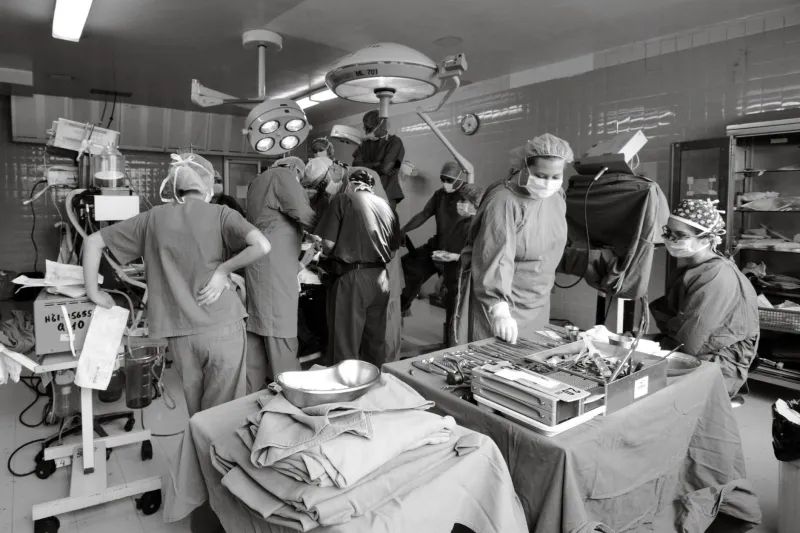
In the mid-twentieth century, American emergency care was, by any honest assessment, a mess.
Hospitals had emergency rooms, technically. But they functioned less like organized medical systems and more like chaotic receiving areas where injured and critically ill patients were attended to in roughly the order they arrived — a system that worked fine if everyone who came through the door had a similar level of need, and failed dangerously when they didn't. Which was most of the time.
The medical establishment knew there were problems. Committees were formed. Papers were written. Credentialed professionals with impressive titles gathered in conference rooms and debated theoretical frameworks for improving patient flow and treatment prioritization.
And then there was Eleanor Voss.
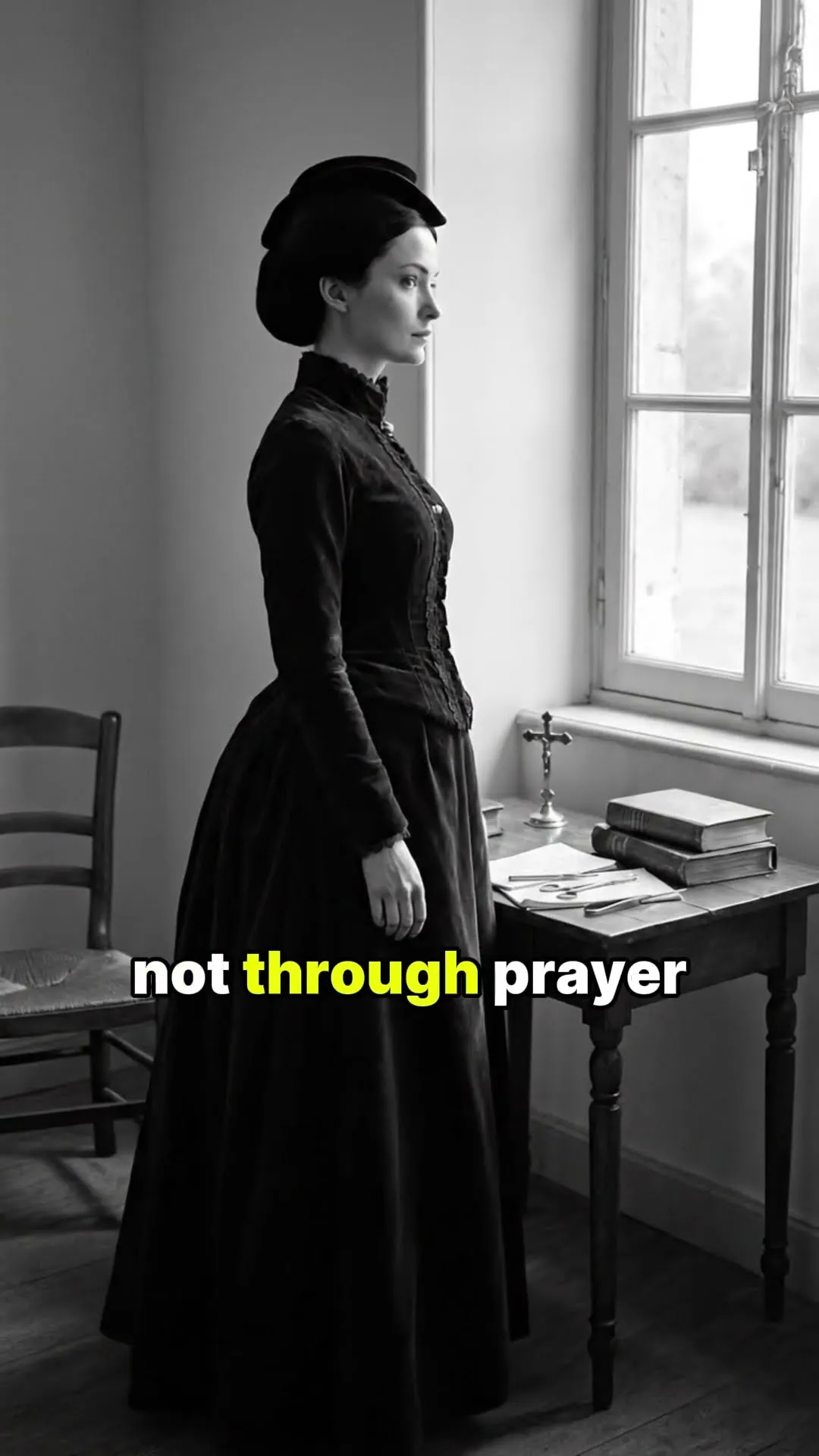 Photo: Eleanor Voss, via i.ytimg.com
Voss had no medical degree. She had worked, for most of her adult life, as a hospital administrator — the kind of role that kept institutions running but rarely got anyone invited to the clinical conversations. She knew supply chains, staffing schedules, budget cycles, and the unglamorous logistics of keeping a large building full of sick people functioning from one day to the next.
What she also had, accumulated over fifteen years of working in and around emergency departments in three different states, was an intimate, ground-level understanding of how those departments actually behaved under pressure — as opposed to how the theoretical models said they should.
That gap between theory and reality was, it turned out, the most important thing in the room.
What the Doctors Were Getting Wrong
The prevailing thinking about emergency care prioritization in the 1950s and early 1960s was built around physician judgment — the idea that a trained doctor, upon seeing a patient, would correctly assess severity and direct treatment accordingly. It was a reasonable assumption. It was also, in practice, consistently undermined by the conditions of an actual emergency department.
Physicians were overwhelmed. The assessment process was unstructured. Different doctors applied different criteria, sometimes to the same patient on the same shift. There was no shared language for communicating urgency between the triage area and the treatment rooms. Nurses and support staff — the people with the most continuous contact with incoming patients — had no formal mechanism for flagging deteriorating conditions to physicians who were occupied elsewhere.
Voss had watched this play out, in real time, more times than she could count. She had seen patients with serious but non-obvious conditions wait while others with louder but less critical presentations received immediate attention. She had watched the informal, improvised triage systems that individual nurses developed on their own — because nobody had given them an official one — and noticed that those informal systems often worked better than the theoretical framework the institution claimed to be using.
She started writing it down.
The Document Nobody Asked For
In 1961, Voss submitted a twelve-page internal memo to the medical director of the hospital where she was then working, in Chicago. The memo was titled, with characteristic bluntness, "Observations on Patient Prioritization Failures in Emergency Admissions."
It was not warmly received.
The medical director acknowledged it. He did not act on it. A senior physician who reviewed it described Voss's observations as "administratively informed but clinically uninformed" — a polite way of saying that someone without a medical degree had no standing to critique clinical processes, regardless of what she might have observed.
Voss revised the memo, incorporated feedback from several nurses who had been doing exactly the kind of informal triage work she'd described, and submitted it again. Then she submitted a version of it to a regional hospital administrators' association that was, at the time, beginning to grapple with the liability implications of emergency care failures.
That audience was more receptive. Not because they were more enlightened, but because they were thinking about lawsuits.
The Turning Point
The early 1960s brought a series of high-profile incidents — patients who died in emergency waiting rooms, cases that attracted press attention, legal actions that made hospital boards suddenly very interested in the question of whether their emergency departments had defensible triage protocols.
Voss's framework, which had been circulating informally through the hospital administrators' network, started getting more serious attention. It proposed a structured, nurse-administered initial assessment process — a set of standardized criteria that could be applied consistently, regardless of which physician happened to be on duty, to sort patients by urgency before a physician saw them.
The idea was not entirely new. Military medicine had been using triage principles since the Civil War. What Voss's framework did was translate those principles into the specific operational context of a civilian emergency department — with attention to staffing realities, physical layout constraints, documentation requirements, and the communication dynamics between nursing staff and physicians.
That translation work, grounded in fifteen years of watching real emergency departments function and malfunction, was the thing that made it actionable.
The Long Road to Recognition
Voss spent the better part of a decade advocating for formal adoption of structured triage protocols before she started seeing her ideas reflected in official guidance documents. The process was neither fast nor gracious.
Her work was frequently absorbed into the research of credentialed professionals without attribution. Physicians who had initially dismissed her observations later published papers on emergency triage prioritization that drew, sometimes explicitly and sometimes not, on the framework she had developed. She was occasionally invited to contribute to committee work, then found her contributions summarized and credited to the committee rather than to her.
She kept going anyway. She connected with nurses' associations, with hospital liability insurers, with the emerging field of emergency medicine as it worked toward formal specialty recognition in the late 1960s. She made herself useful to people who had the institutional standing she lacked, and she used those relationships to keep her ideas in circulation.
By the time the American College of Emergency Physicians began formalizing emergency triage standards in the early 1970s, the structured, nurse-administered assessment process that Voss had been describing since 1961 was sufficiently embedded in the conversation that it shaped the standards that emerged — even if her name wasn't prominently attached to them.
 Photo: American College of Emergency Physicians, via s3.amazonaws.com
What She Left Behind
Modern emergency triage in the United States operates on a five-level severity scale — a system that determines, within minutes of a patient's arrival, how quickly they need to be seen and what resources they need. It is administered primarily by nurses. It uses standardized criteria applied consistently across patients and shifts. It is designed to function under the chaotic, high-volume conditions of a real emergency department rather than the orderly conditions of a theoretical model.
Those are Voss's ideas. Not hers alone — systems like this develop through the contributions of many people over many years. But the conceptual architecture, the insistence on nurse-administered structured assessment, the attention to operational reality over theoretical elegance — those trace back, through a winding and poorly documented lineage, to a twelve-page memo that a medical director in Chicago didn't think warranted a serious response.
Voss died in 1989, having spent the last decade of her career teaching hospital administration. She was not famous. She did not receive the kind of recognition that gets a building named after you.
But somewhere tonight, in an emergency room in every city in this country, a nurse is running through a structured assessment checklist and making a judgment call that will determine whether a patient gets seen in two minutes or two hours. The checklist exists because someone who wasn't supposed to be in the room refused to leave it.
That's usually how the important things get built.