The Scouts Had It All Wrong: Six Athletes Passed Over, Written Off, and Then Impossible to Ignore

Scouts like to talk about "the moment" — that instant when they see a player and just know. It's the mythology that keeps the whole system running. The idea that trained eyes and decades of experience add up to something close to certainty.
These six athletes are proof that certainty is a comfortable lie.
Each of them was evaluated, assessed, and dismissed. Not by amateurs — by professionals whose entire job was to spot greatness before it arrived. And each of them went on to define what greatness in their sport actually looks like. The question isn't just what the scouts missed. It's why they keep missing it.
1. Mike Piazza — The Favor Pick Who Became the Greatest Hitting Catcher in Baseball History
Mike Piazza was selected in the 62nd round of the 1988 MLB Draft. The 62nd round. There were 1,433 players chosen before him. He was picked almost entirely as a courtesy to his father, a family friend of Dodgers manager Tommy Lasorda, and scouts made no secret of the fact that they didn't expect him to amount to anything.
The evaluations were brutal. His footwork behind the plate was considered poor. His arm was average. His swing, while powerful, was thought to have too many holes to survive professional pitching.
Piazza spent years in the minors proving everyone wrong with a relentlessness that bordered on personal. By the time he reached the majors, his bat was something scouts didn't have language for. He hit .362 in his rookie year. He made twelve All-Star teams. He retired with more home runs than any catcher in the history of the game.
What the scouts missed: a work ethic that could transform raw tools into elite production, and a competitive instinct that no radar gun can measure.
2. Kurt Warner — The Grocery Stocker Who Became a Super Bowl MVP
Kurt Warner went undrafted in 1994. The Green Bay Packers signed him as a free agent and cut him before the season started. He went home to Iowa, stocked shelves at a grocery store for $5.50 an hour, and kept practicing wherever he could find a field.
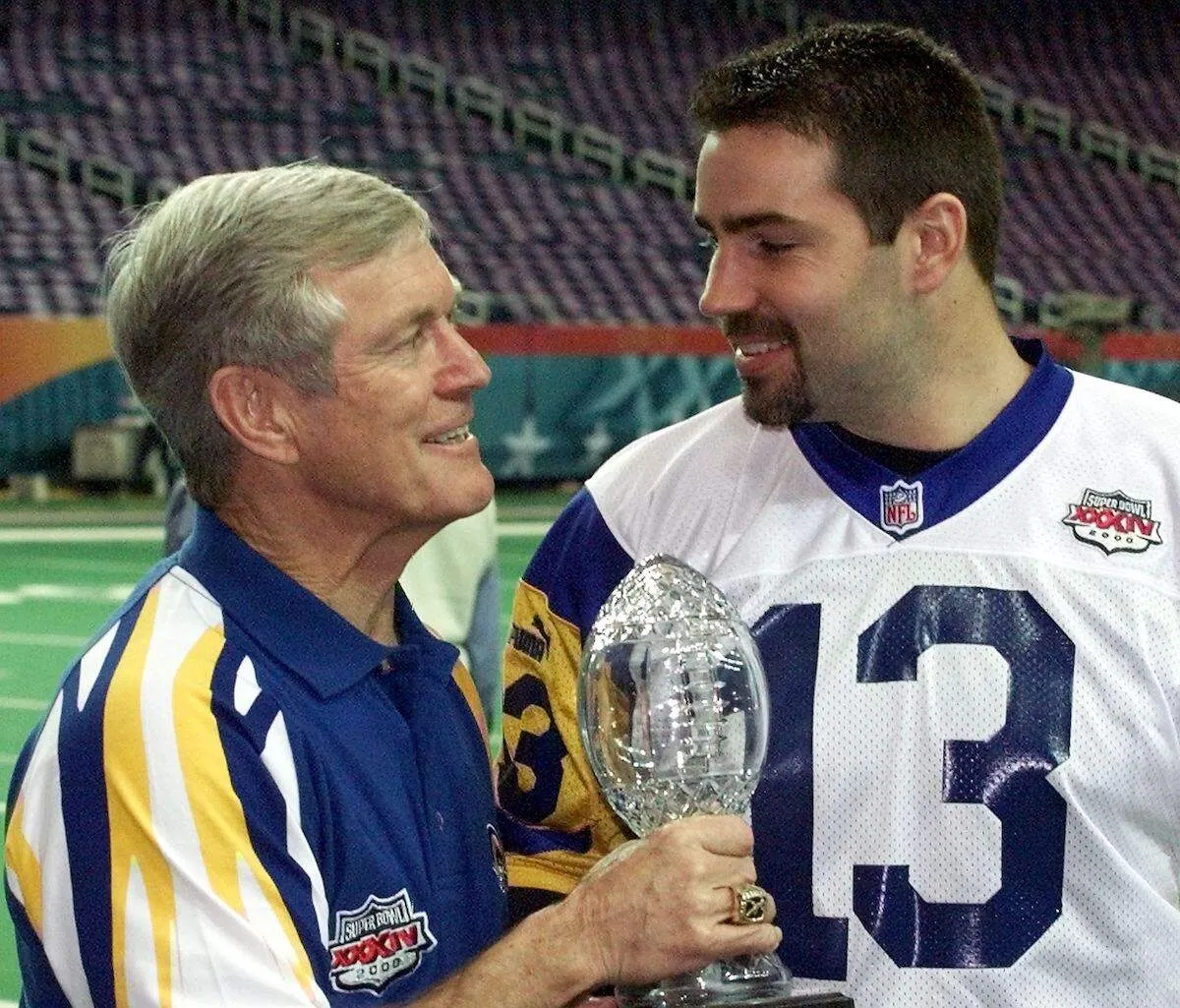 Photo: Kurt Warner, via www.sportscasting.com
Scouts had flagged his release point as inconsistent. His footwork in the pocket was considered mechanical. His arm strength was rated as adequate but not elite. In an era obsessed with measurables, Warner's tape didn't pop.
What happened next is one of the most improbable runs in NFL history. Warner eventually landed with the St. Louis Rams, stepped in when the starter went down, and led the team to a Super Bowl victory. Then he did it again with the Arizona Cardinals a decade later. He finished his career with two Super Bowl appearances, one MVP award, and a bust in Canton.
The grocery store years didn't break him. If anything, they clarified what he was playing for.
3. Scottie Pippen — The Small-Town Kid Nobody Recruited
Scottie Pippen wasn't just passed over by NBA scouts — he was passed over by college scouts first. He was so lightly recruited coming out of high school in Hamburg, Arkansas, that he enrolled at the University of Central Arkansas essentially as a walk-on, initially serving as the team's equipment manager before earning a roster spot.
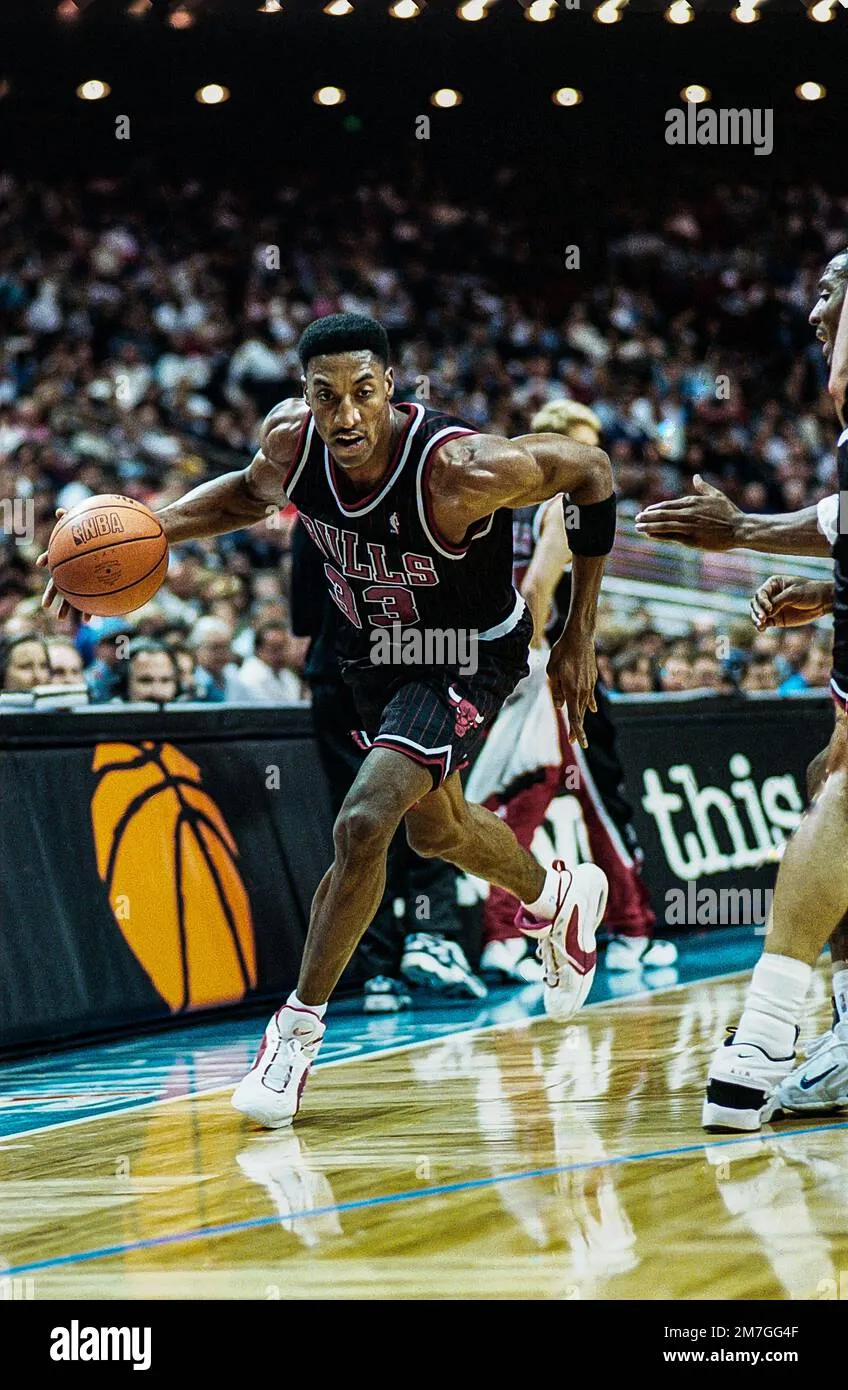 Photo: Scottie Pippen, via c8.alamy.com
By the time NBA scouts finally looked at him, they saw a long, athletic small forward with underdeveloped ball-handling and no real track record against high-level competition. He was taken fifth in the 1987 Draft, which sounds impressive until you realize most teams had him ranked significantly lower and the Seattle SuperSonics, who held the pick, immediately traded him to Chicago.
The Bulls knew something the rest of the league was still figuring out: Pippen's defensive instincts, court vision, and adaptability were things you couldn't manufacture. He became one of the most complete two-way players the game has ever seen — and the ideal partner for the most scrutinized player in basketball history.
4. Jim Rice — The Power Hitter Who Sat While Others Got Called
Jim Rice was drafted by the Boston Red Sox in 1971, so he wasn't ignored entirely. But within the organization, the internal debates about his future were revealing. Several evaluators questioned whether his swing was too uppercut-heavy to handle elite pitching consistently. There were concerns about his strikeout rate in the minors and whether his defensive profile in left field would be a liability.
For years, Rice was managed cautiously — called up late, platooned at times, handled with the kind of institutional hesitation that tends to follow players who don't fit neatly into a scout's mental model.
What Rice did when given consistent opportunity was hit at a level that made the hesitation look embarrassing. His 1978 season — 46 home runs, 139 RBI, a .315 average — is considered one of the finest offensive seasons in Red Sox history. He was the American League MVP that year. He made the Hall of Fame in 2009.
The lesson: caution applied to the wrong player doesn't protect the organization. It just delays the inevitable.
5. Priest Holmes — Cut, Forgotten, and Then Unstoppable
Priest Holmes went undrafted in 1997 after a college career at Texas that scouts viewed as solid but unremarkable. He was signed by the Baltimore Ravens as an afterthought, spent years as a backup and special teams contributor, and was eventually released when the team decided to go in a different direction.
The Kansas City Chiefs picked him up. What followed was one of the most dominant three-year stretches by a running back in NFL history. From 2001 to 2003, Holmes rushed for more than 1,400 yards each season, scored 27 touchdowns in 2003, and reset the franchise record books entirely.
Scouts had looked at his size — 5-foot-9, listed at around 205 pounds — and decided he couldn't hold up as a feature back at the NFL level. They weren't entirely wrong about the physical profile. They were completely wrong about the player.
6. Draymond Green — The Guy Drafted to Fill Out a Roster
Draymond Green was the 35th pick in the 2012 NBA Draft. Late second round. The Golden State Warriors selected him largely because they had the pick and needed bodies. Internally, he was considered a developmental project with a questionable ceiling — undersized for a power forward, not quick enough to guard smaller players, and with a jump shot that drew skepticism.
Green has since won four NBA championships. He has made multiple All-Defensive teams. He is widely considered one of the most important players in the modern evolution of basketball — a position-less, switchable, playmaking force who essentially helped create a template that the entire league now chases.
The scouts didn't miss his measurements. They missed his mind. His ability to read a game in real time, orchestrate defensive rotations, and drag teammates into better positions isn't something that shows up in a pre-draft workout. It shows up in the wins column, eventually.
The Pattern Behind the Misses
Look across these six stories and a few common threads emerge. Scouts consistently undervalued intangibles — work ethic, competitive drive, basketball or football IQ — in favor of measurable physical traits. They penalized players for unconventional paths, as if the route to a skill somehow diminished the skill itself. And they applied mental models built on past players to evaluate future ones, which is a reliable way to miss anyone who doesn't look like what came before.
The system isn't broken, exactly. It works often enough to sustain itself. But the players it misses aren't anomalies. They're a warning — a recurring reminder that the most important things about a great athlete are usually the hardest to see from the stands.